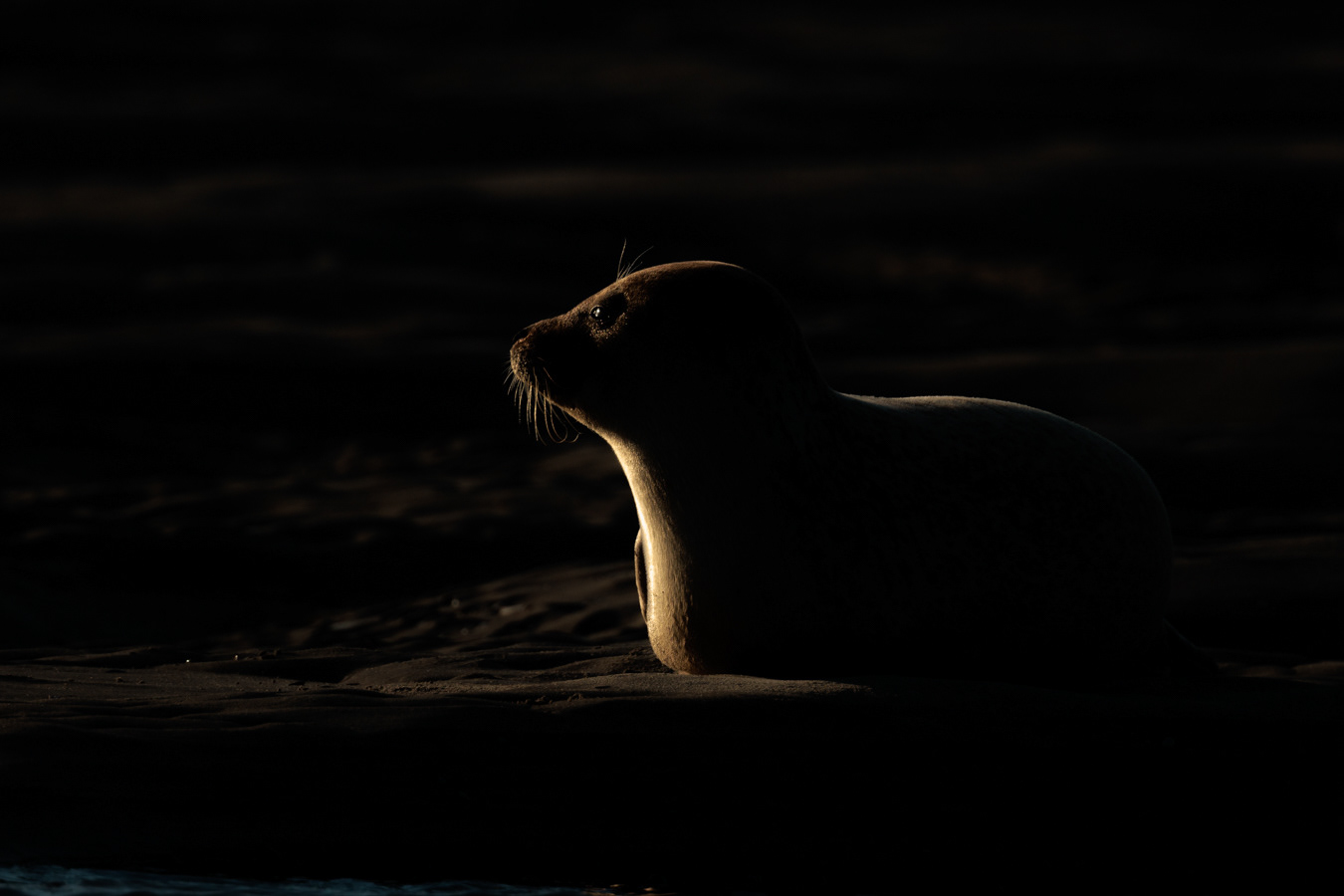
There are regions that are, all things considered, surprisingly easy to reach, yet where you would hardly expect to encounter scenes and situations more typical of far wilder, distinctly northern environments. These are places where you can come across two species of unquestionable interest, the harbour seal (Phoca vitulina) and the grey seal (Halichoerus grypus), evoking the Scottish archipelagos or Iceland atmosphere. And yet, along the coast of northern France, between Calais and Normandy, it is possible to find remarkably varied and contrasting landscapes, ranging from imposing cliffs to vast estuaries shaped by some of the strongest tides in Europe. Here, seals and many typically North Atlantic bird species find an ideal habitat. And, importantly for us photographers, one that offers excellent opportunities for photographing them. As far as the seals are concerned, these French coasts also mark the southernmost limit of their distribution range. Further south, there are no breeding colonies, only occasional individuals dispersing beyond the main range.
I spent a few days of my holiday in these areas at the end of July 2026, a year in which the increasingly frequent summer heatwaves, here as elsewhere in Europe, had a strong impact on terrestrial ecosystems. The landscape looked, at first glance, rather dry and more reminiscent of southern Europe than of the cool, damp Atlantic coast. Nevertheless, I had the opportunity to make a few wildlife photography sessions, immersed in enchanting landscapes and in the soft, warm light of northern Europe (yes, for Mediterranean people like me Normandy is Northern Europe!).
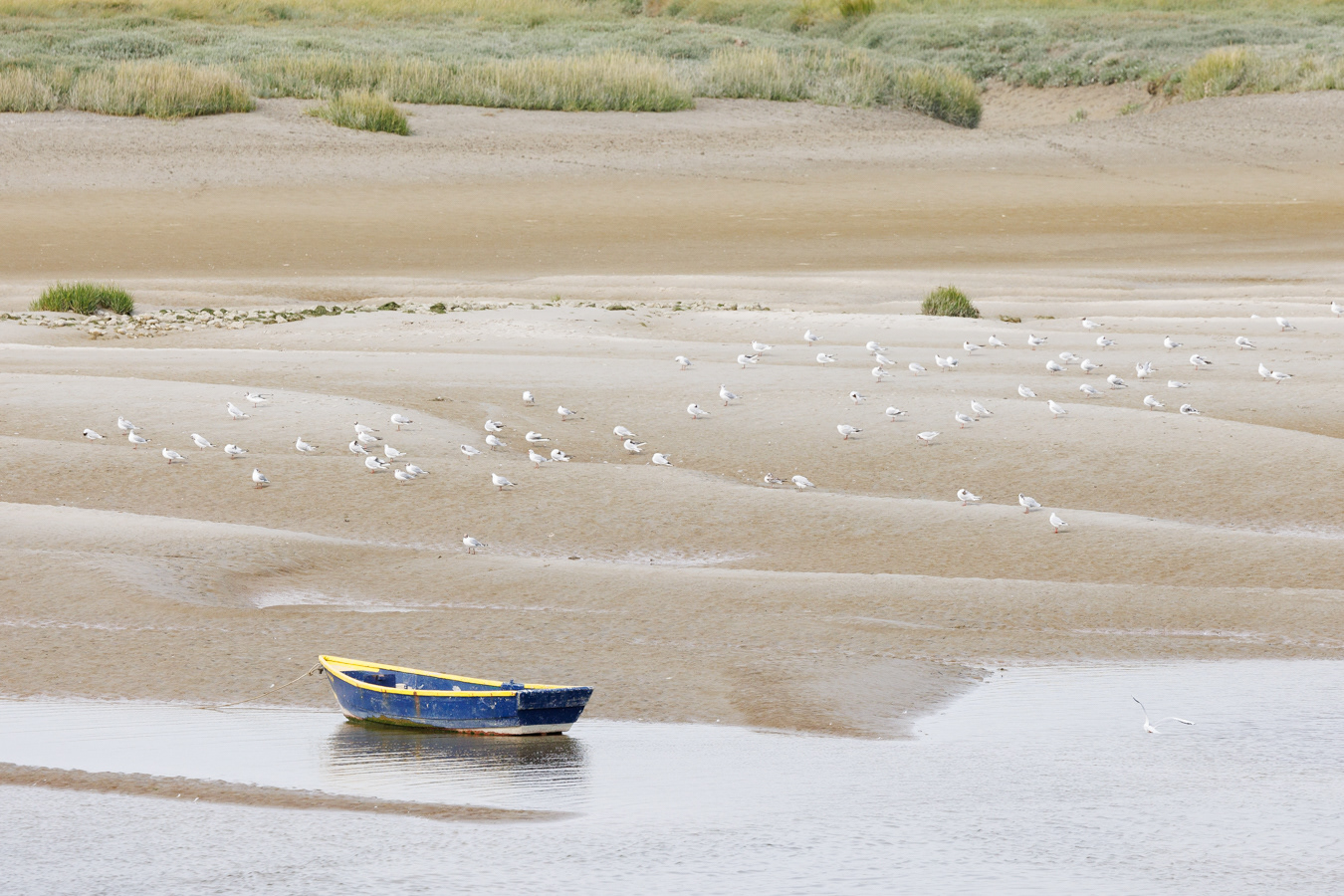
Although they may appear quite similar at first sight, the two seal species are actually rather different in ecology, morphology, and behaviour. I will not go into detail about their morphology; suffice it to say that the grey seal is generally larger, has a more pointed head profile, and usually shows a more pronounced mottling of the coat. In my case, however, I encountered only Phoca vitulina, by far the more abundant species — and perhaps also the more approachable.
Their presence varies throughout the year, peaking precisely in July and August. In the case of the Harbour Seal, this is linked to the breeding cycle, whereas the presence of Grey Seals is exclusively related to feeding movements. Indeed, this seal breeds during the fall months, along the coasts and islands of Britain, the core area of one large population, distributed northwards across the British Isles and then along the western Breton coast and, of course, the eastern coasts of Normandy and Hauts-de-France. In the case of Harbour Seals, on the other hand, it is possible to observe both young animals and adults at the height of their seasonal moult, a phase that follows the demands of reproduction. For this species, each estuary can be assumed to host a distinct sub-population, with relatively little interchange between them, since an individual seal generally travels no more than 50–100 km from its birthplace. Both species are also strongly philopatric, meaning that they tend to return, particularly for breeding, to the places where they were born.
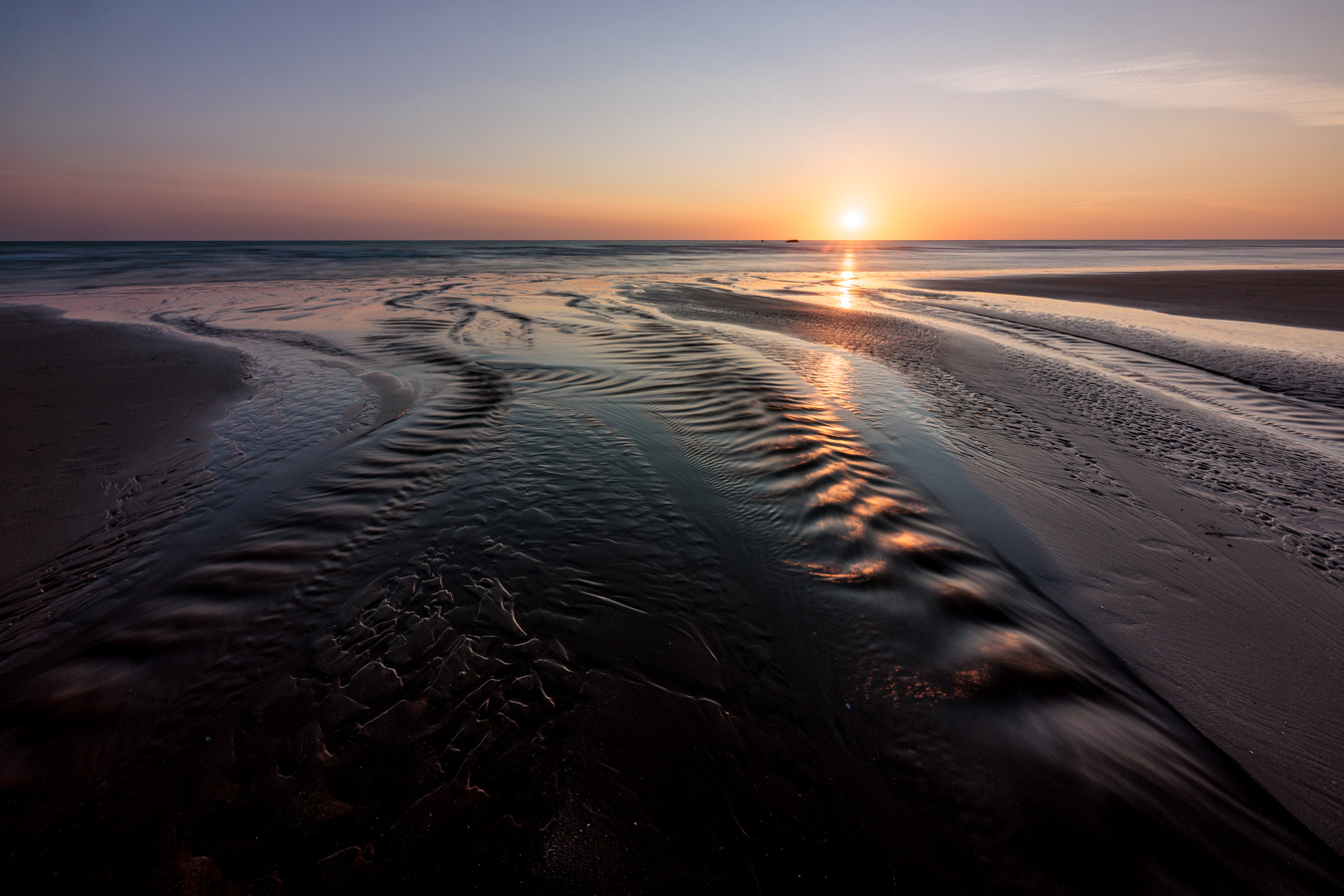
From a photographic perspective, activities in these regions cannot be planned solely around the classic reference points of sunrise and sunset. The rise and fall of the tides are at least as important — and often even more so. I always find it fascinating to witness the continuous renewal of the vast sandy expanses of beaches and estuaries as they are revealed by the retreating tide. It feels as though we are among the first humans to witness the unveiling of a pristine, untouched world, wonderfully shaped by forms, textures and patterns, and concealing surprises left behind by the ocean. These are golden moments for bird activity too, as many species take advantage of the invertebrates caught unawares by the retreat of water. Just imagine the beauty of placing seals within these almost fairy-tale landscapes, especially when the sand takes on the violet and bluish tones of blue hour, before being gradually painted with shades of orange by the first rays of sunlight.
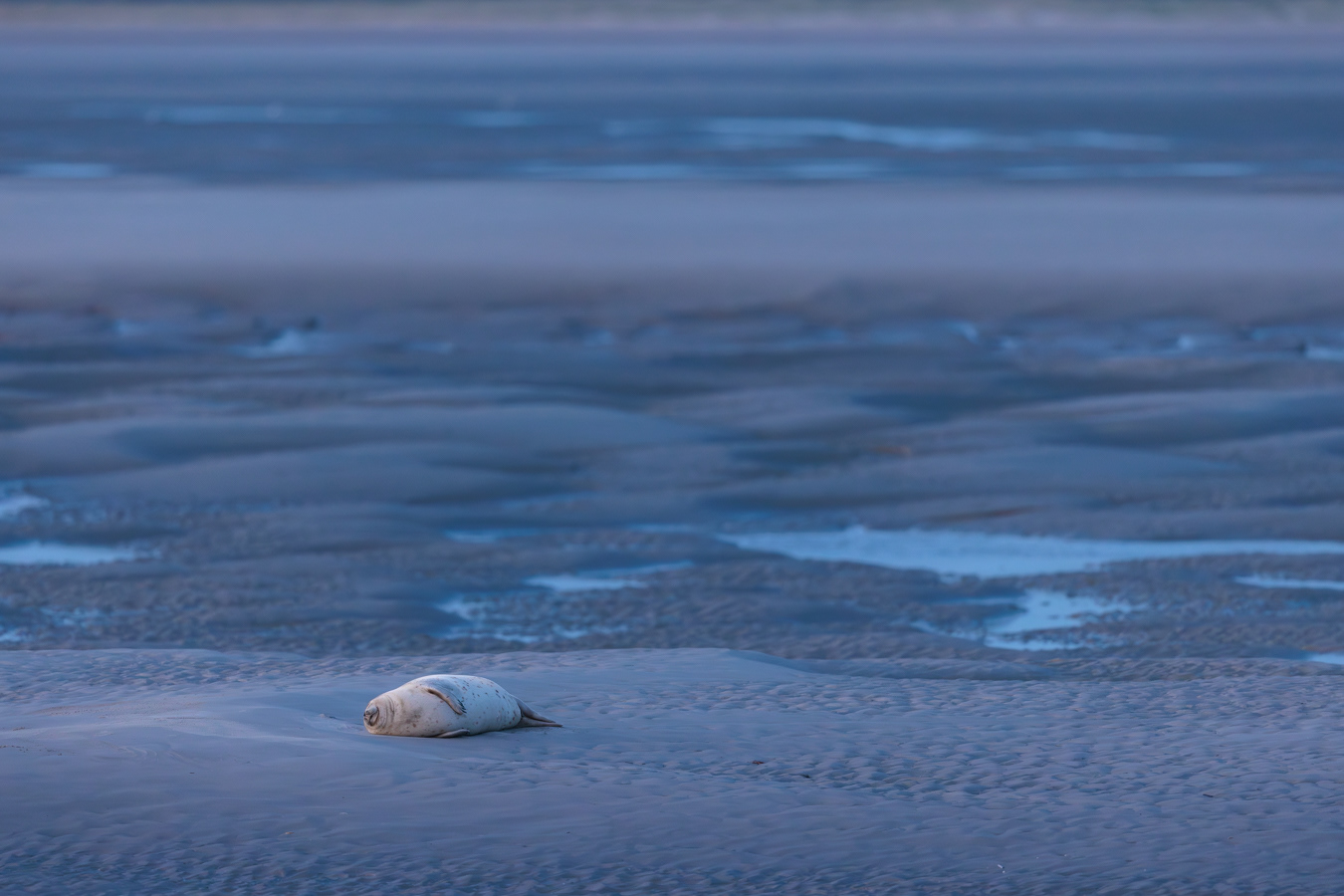
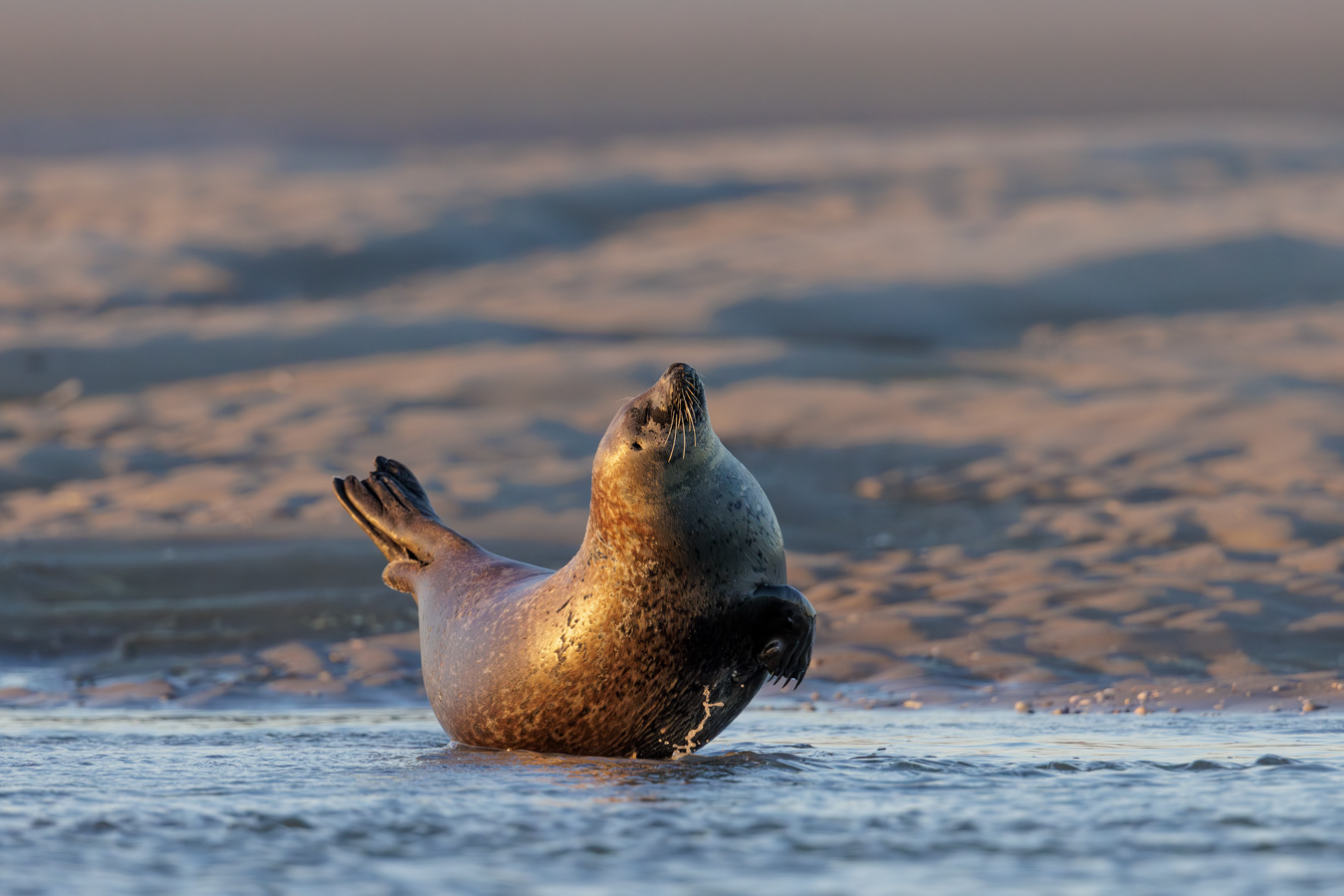
To make the most of this, however, it is essential to understand that the seals’ own activity — or rather, inactivity — follows the same rhythms. As the tide retreats, they can be seen making their way onto the emerging sandbanks, where they settle down for long, relaxed periods of rest, sprawling comfortably across the soft sand. At high tide, by contrast, they are entirely focused on hunting, and usually all you can spot are their heads as they briefly break the surface. Needless to say, the best opportunities for photography occur during the transitional phases, preferably as the tide comes in. At this stage, large numbers of seals are still present on the haulouts where they rest, but the advancing water forces them to become active and move around, trying to enjoy the last few moments of rest. Eventually, they slip into the water, usually facing us, and during the first stages of swimming they will often approach to inspect us with curiosity — perhaps mixed with a touch of irritation, judging by their expressions. It is during these transitional moments that they display their famous arched posture, almost as if trying to minimise the amount of their bodies in contact with the advancing water. Then they roll, make short leaps and splash water in every direction. Interactions, not always friendly, are also more likely during these dynamic moments.
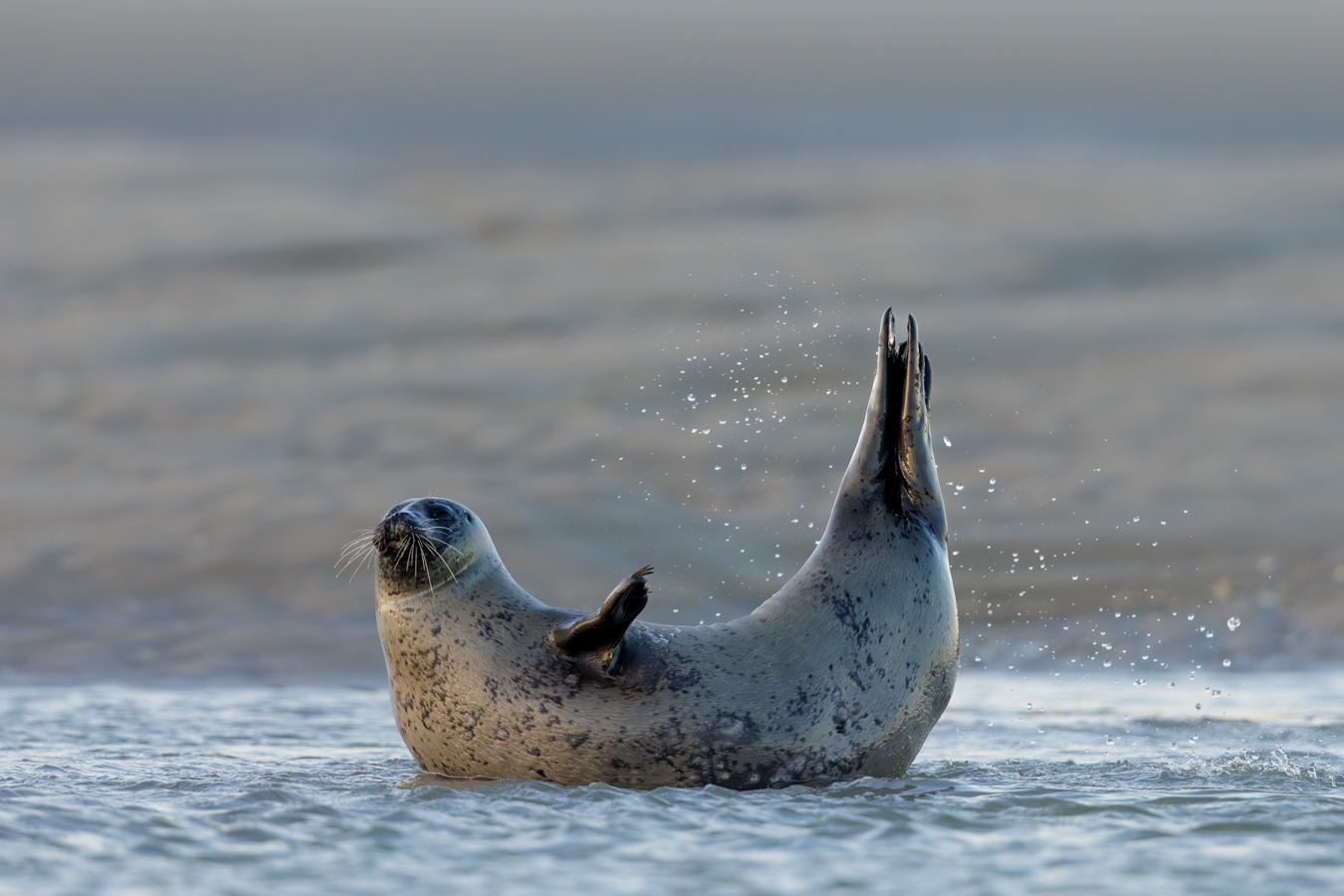
Photographing with an incoming or outgoing tide is a real challenge, but above all it requires the utmost caution. Never venture beyond the areas considered “safe”, which can usually be identified without difficulty, because it takes only moments to find yourself cut off by an incoming flow of water in an estuary. As someone who loves shooting from water level, I had to acknowledge that finding an optimal viewpoint in such dynamic tidal conditions is a difficult task — and even when you succeed, you will have to abandon your position only a few minutes later. Invariably, you will emerge thoroughly soaked. Rubber boots are highly recommended, and a rubber mat is absolutely essential.
Moreover, even the slightest unusual movement or positioning can easily trigger the seals escape, even from several hundred meters away. Local regulations impose a minimum distance of 300 meters from the seals. There is little point in trying to photograph them from that distance, but it is equally pointless — and potentially harmful, especially to pups that could be abandoned — to try to get closer by walking along the sandy dunes and circumventing these rules. So, what is the solution? We are not allowed to approach the seals, but if the seals themselves choose to approach human structures along the edges of tidal areas, we can take advantage of the situation. Some people, myself included, might instinctively feel reluctant about this, but in practice it is almost essential to make use of certain seal resting areas located close to jetties and breakwaters that can be accessed on foot. The seals are accustomed to human traffic and remain on the opposite bank, at a distance that is comfortably within reach of a telephoto lens of 400 mm or longer. If they dive into the water, they may even pass within a few meters of you.
The resting areas they choose are, in fact, always the same and meet very specific requirements. In estuaries, they are almost invariably located on raised sandbanks close to the main channels of river flow, where even at low tide there is enough water movement to allow the seals to escape quickly in the event of a threat. It is not difficult, by searching online, to find extensive information about the location of these areas, which are faithfully occupied by seals and attract not only photographers but also curious visitors, families and wildlife enthusiasts. This is yet another reason to arrive early at dawn if you want greater freedom of movement and animals that are more inclined to approach.
Moreover, even the slightest unusual movement or positioning can easily trigger the seals escape, even from several hundred meters away. Local regulations impose a minimum distance of 300 meters from the seals. There is little point in trying to photograph them from that distance, but it is equally pointless — and potentially harmful, especially to pups that could be abandoned — to try to get closer by walking along the sandy dunes and circumventing these rules. So, what is the solution? We are not allowed to approach the seals, but if the seals themselves choose to approach human structures along the edges of tidal areas, we can take advantage of the situation. Some people, myself included, might instinctively feel reluctant about this, but in practice it is almost essential to make use of certain seal resting areas located close to jetties and breakwaters that can be accessed on foot. The seals are accustomed to human traffic and remain on the opposite bank, at a distance that is comfortably within reach of a telephoto lens of 400 mm or longer. If they dive into the water, they may even pass within a few meters of you.
The resting areas they choose are, in fact, always the same and meet very specific requirements. In estuaries, they are almost invariably located on raised sandbanks close to the main channels of river flow, where even at low tide there is enough water movement to allow the seals to escape quickly in the event of a threat. It is not difficult, by searching online, to find extensive information about the location of these areas, which are faithfully occupied by seals and attract not only photographers but also curious visitors, families and wildlife enthusiasts. This is yet another reason to arrive early at dawn if you want greater freedom of movement and animals that are more inclined to approach.
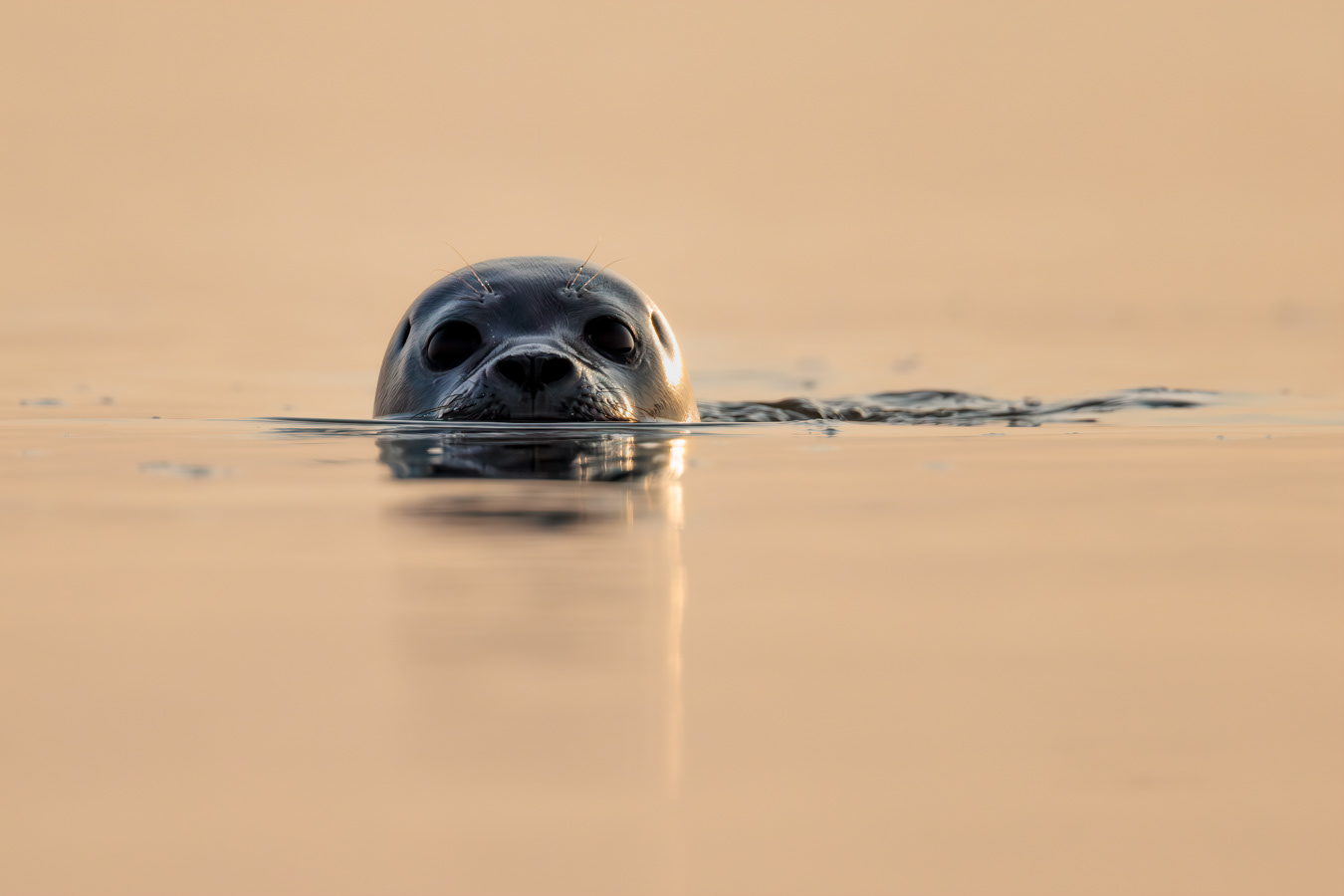
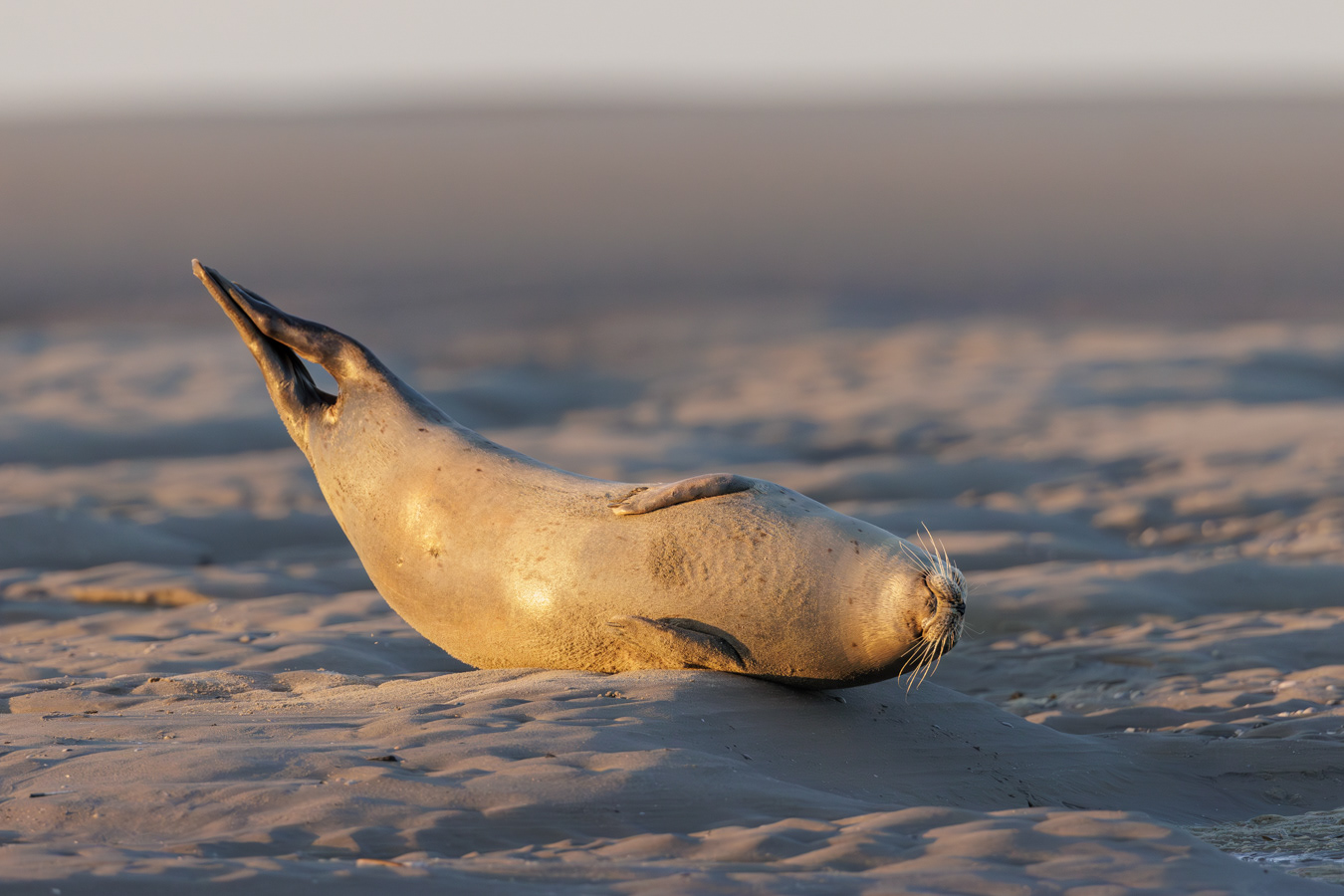
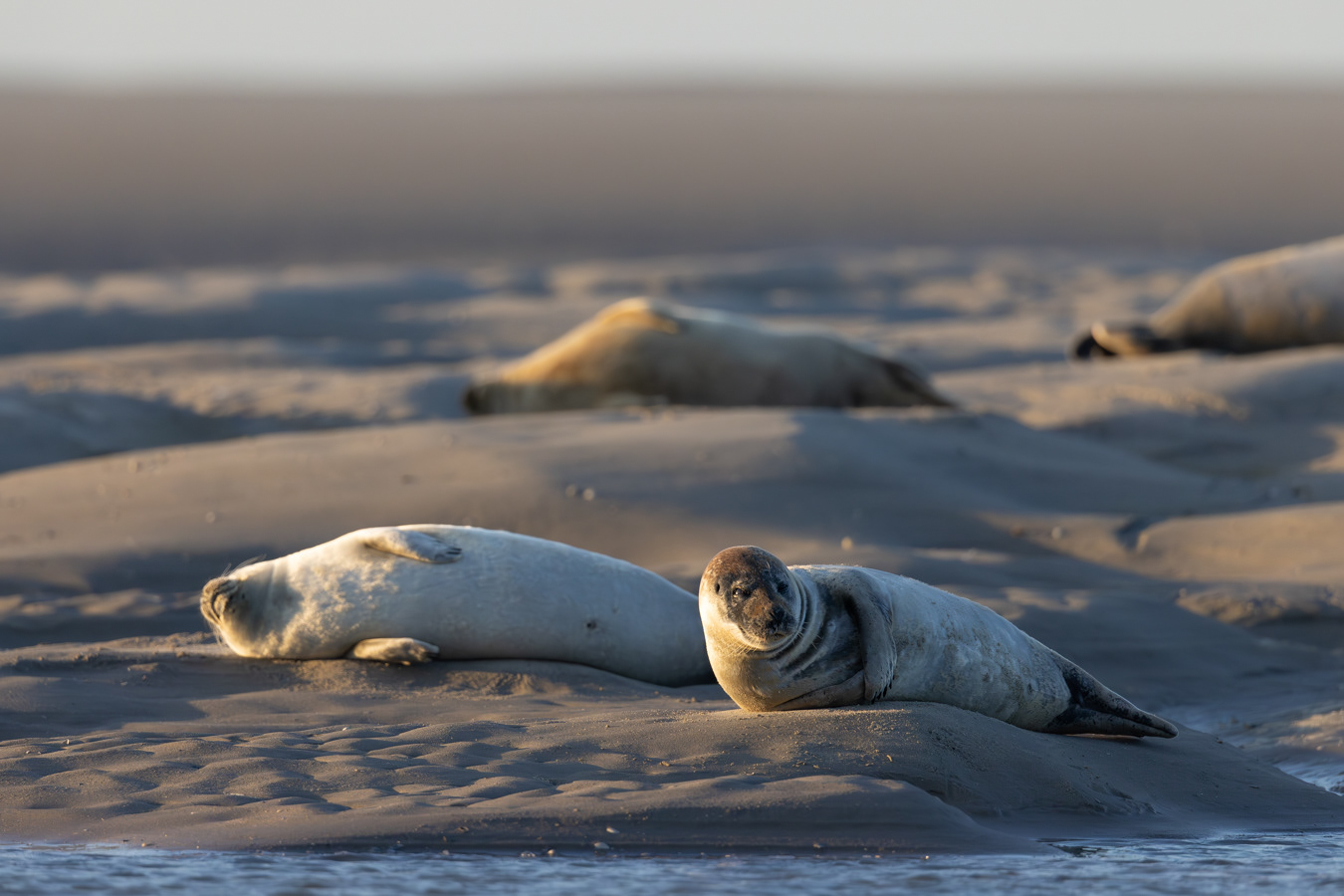
Beyond the immediate appeal that seals naturally inspire in everyone, making them perfect flagship species for conservation purposes, we should always remember that they are wild animals, with their own needs and vulnerabilities. Despite their apparent laziness and bulk, for example, their prolonged periods of rest, particularly in summer, are not simply a matter of indulgence. They are essential for building up and maintaining a high level of blubber (the seal fat). That plumpness, which may look amusing to us, is actually crucial for surviving the winter months and for nursing their young. I was also struck by the forceful, purposeful nature of their swimming movements, almost intimidating when you watch them begin hunting in the currents. They move forward decisively, displacing considerable volumes of water, showing no trace of playfulness but instead reminding us that we are witnessing a predator-prey dynamic within a complex ecosystem such as an estuary.
After all, as photographers, all we need to do is enlarge the image and examine our portraits in detail to notice fresh wounds and scars that bring us back to the reality and harshness of life in the wild. And when looking closely at those dark eyes in close portraits taken when swimming it is impossible not to notice the same glint of focused intensity and seriousness that can be seen in a wolf, bear, bird of prey or any predator when it is actively hunting.
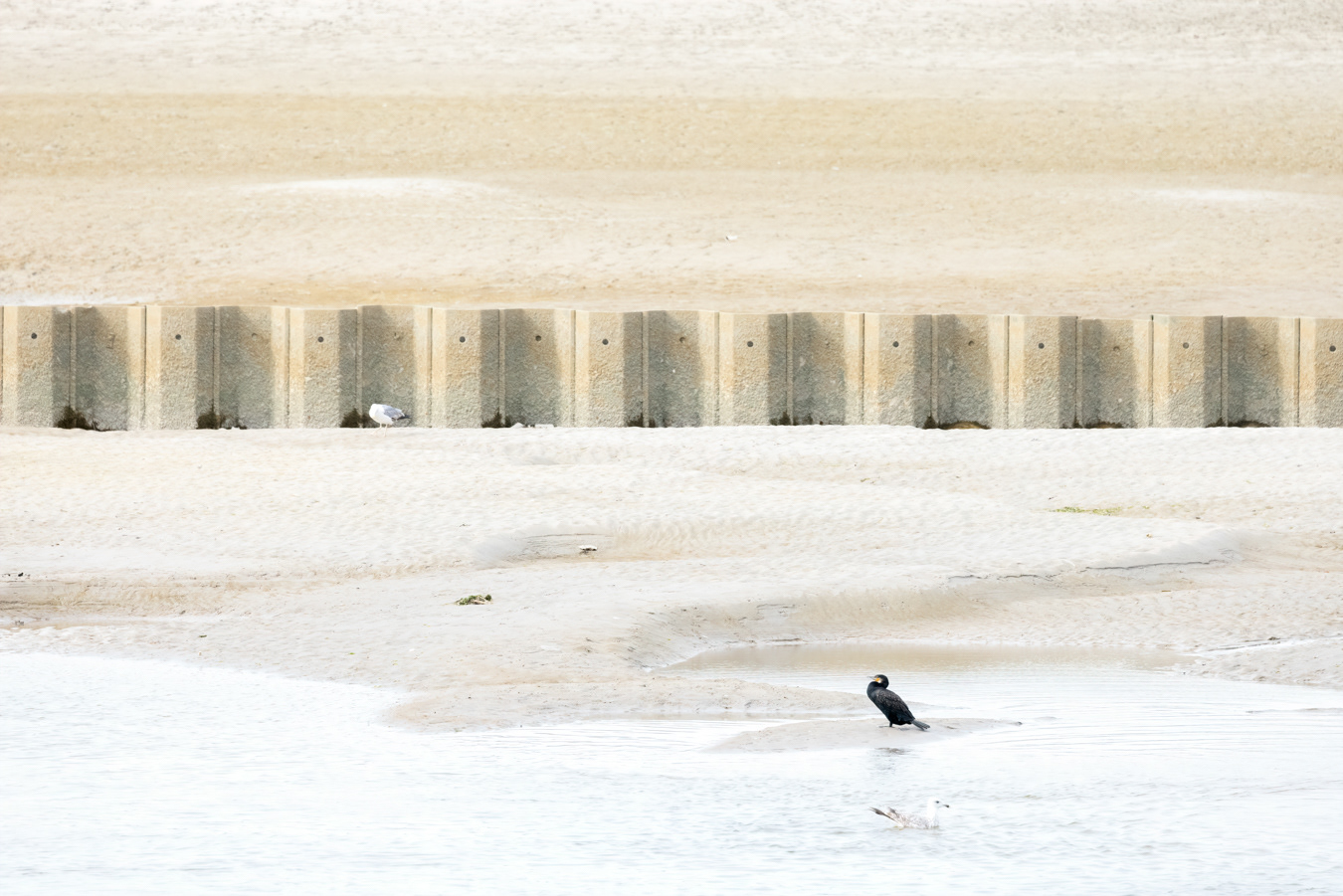
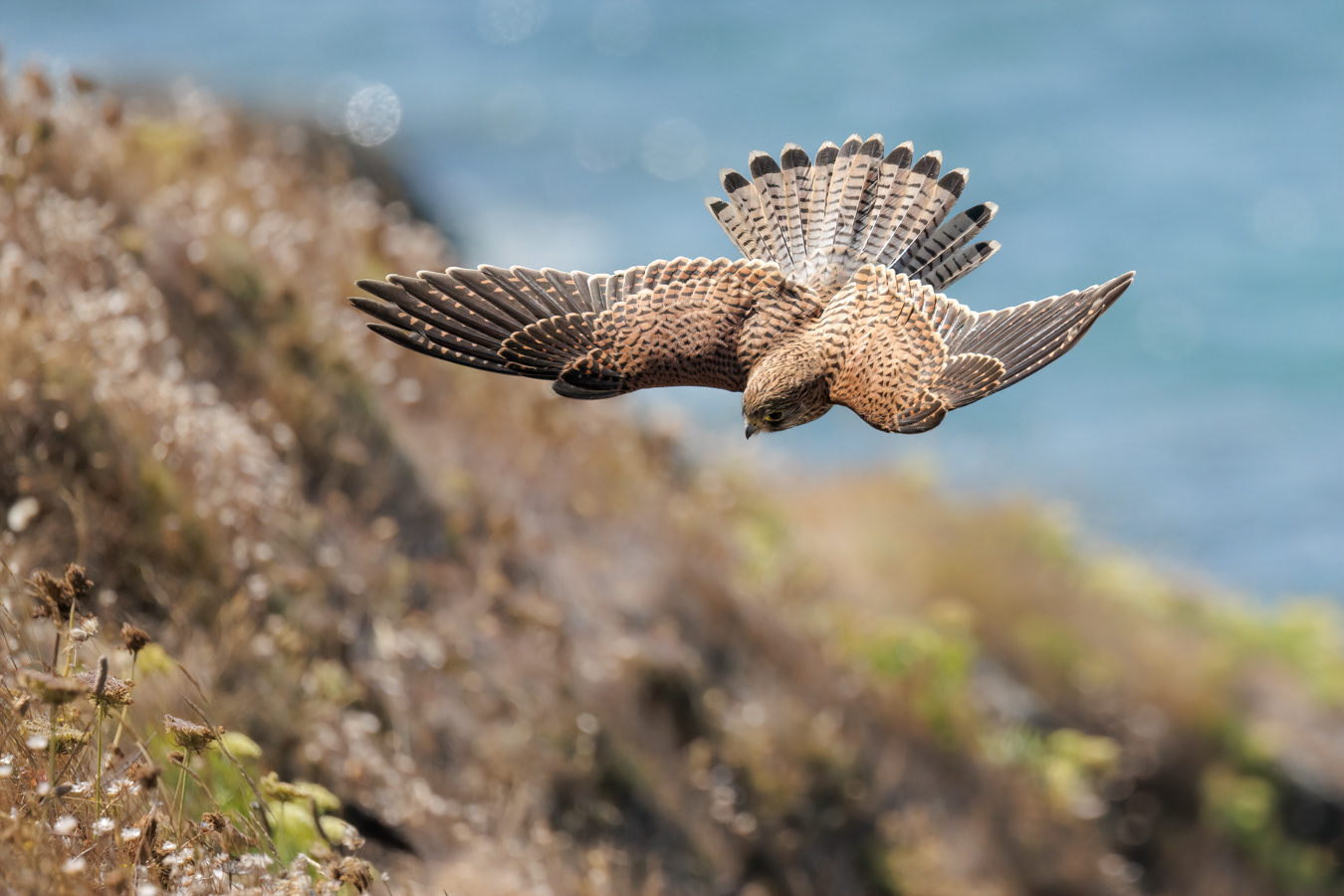
Beyond the seals, which would already be reason enough to make the journey, it is worth remembering that northern France contains some of the most important bird hotspots in continental Europe, including the Bay of the Somme. High summer, when I visited, is certainly not the ideal time for photographing waterbirds in the lagoon areas. Nevertheless, you are unlikely to run out of good photographic opportunities, not only along the beaches but also while walking the magnificent trails that run alongside the pale sedimentary cliffs. Alongside the ever-present gulls, including lesser black-backed gulls and herring gulls, you may also encounter fulmars, terns, oystercatchers, curlews and various birds of prey.
Thank you!