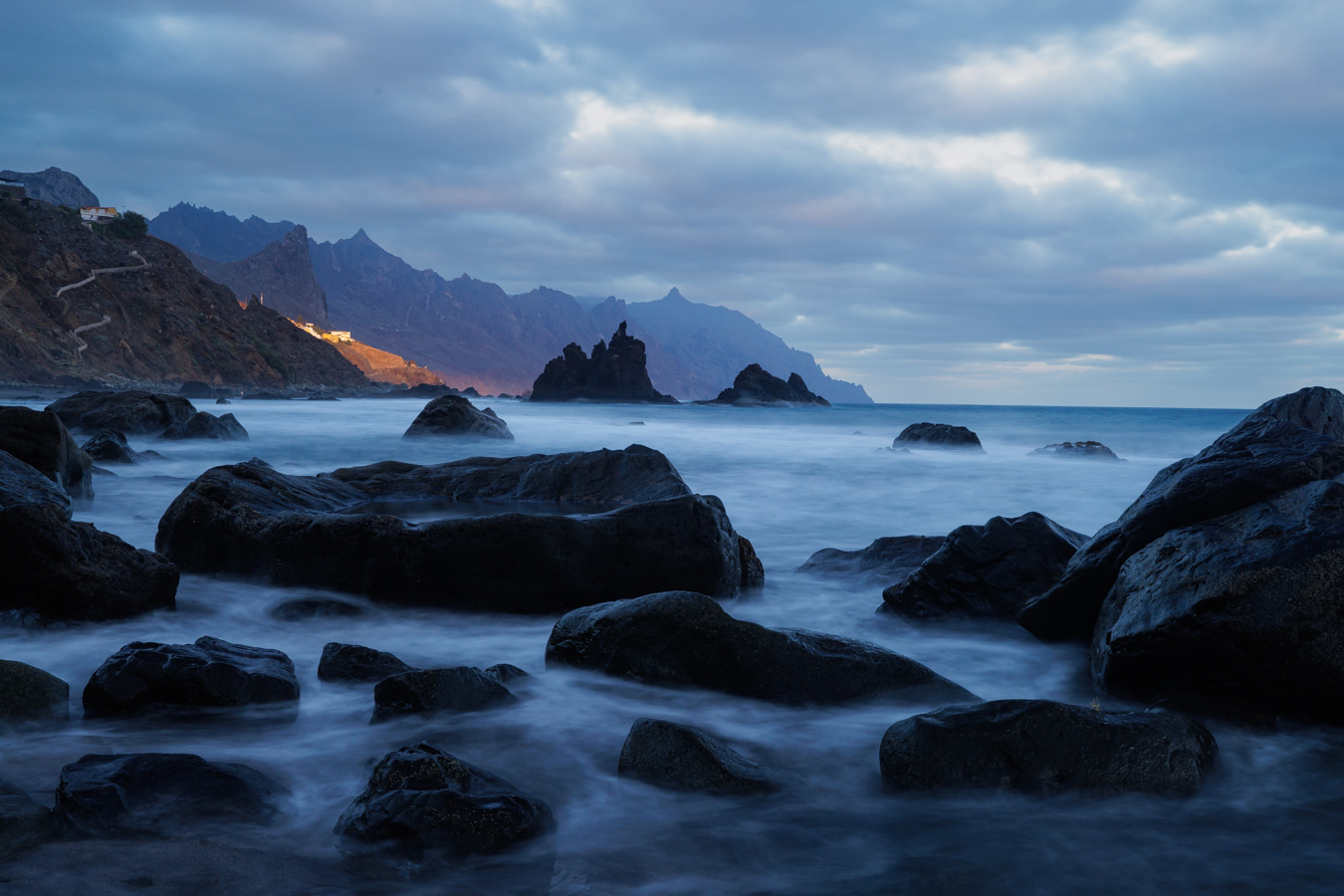
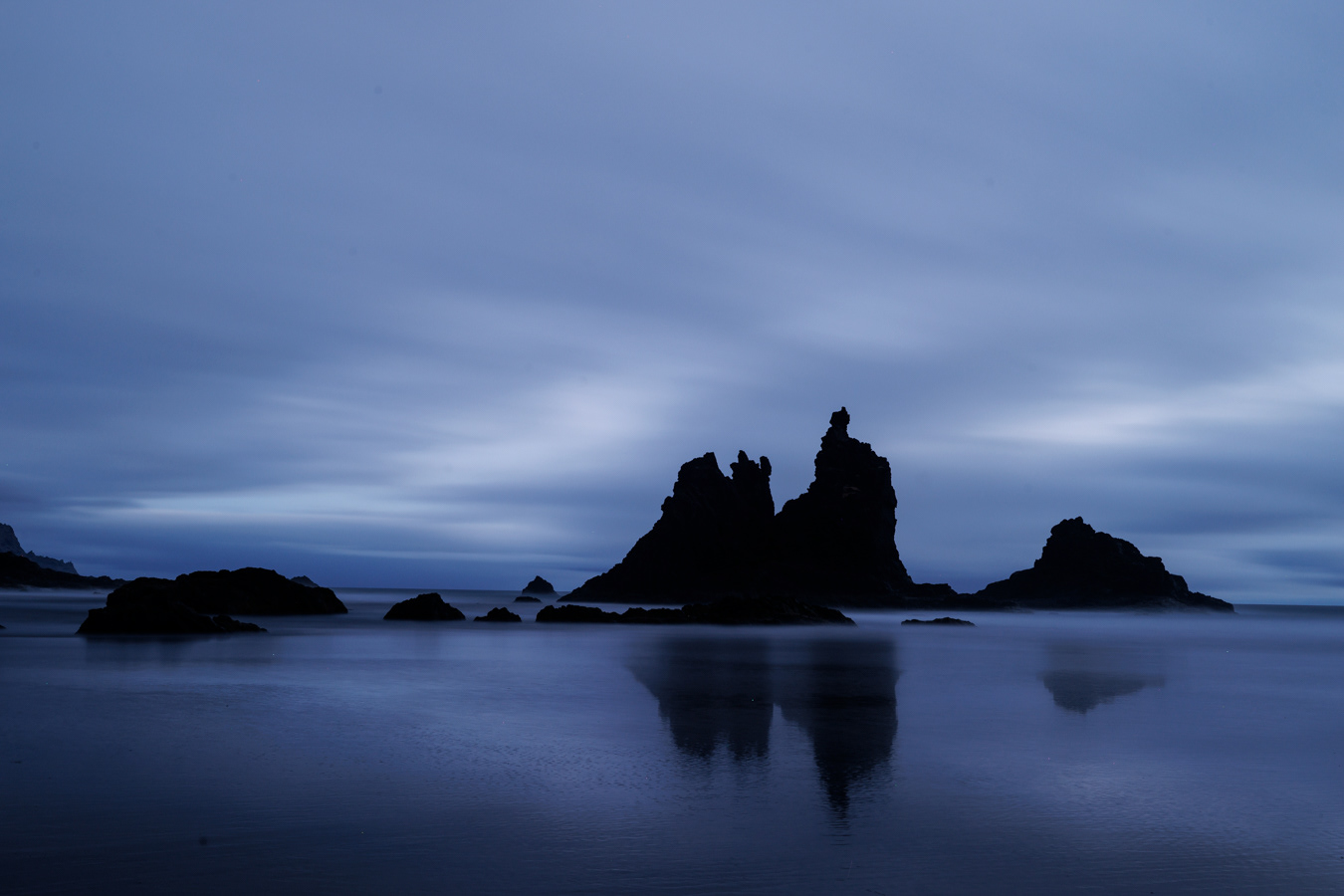
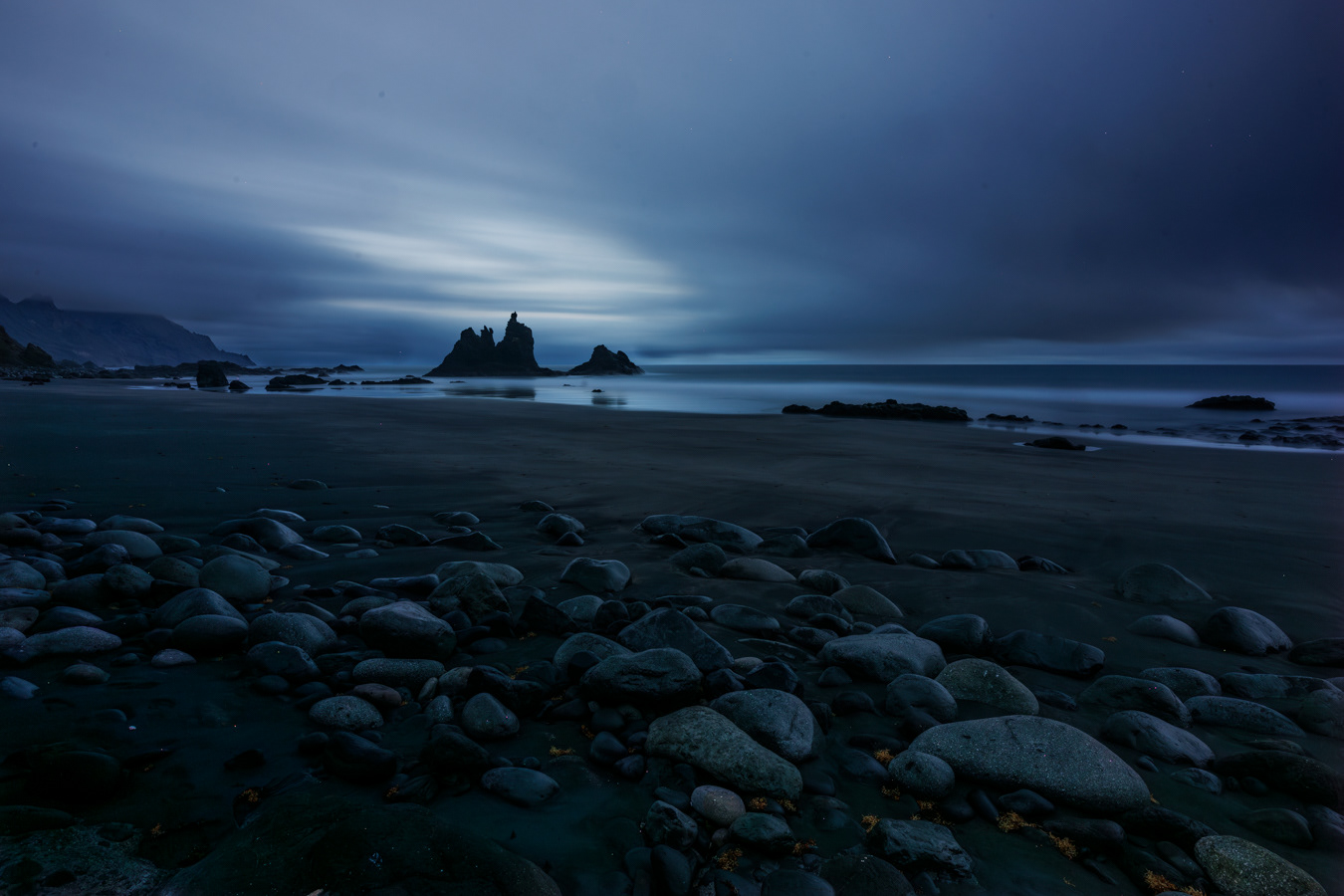
Playa de Benijo, Tenerife
A Sum of Natural Contrasts. This is how the Canary Islands are most often described in guidebooks and travel publications highlighting their attractions and itineraries. And from what I’ve seen, it’s absolutely true. What most of these guides don’t say, however, is that from a natural and scenic point of view, the contrasts here emerge from the opposition of elements so unique and distinct that they hardly need to contrast with anything to capture the attention and admiration of any nature enthusiast or photographer.
All this exists despite the islands’ strong tourism-driven identity—an identity that, shaped by the consumer culture of the 1980s, often portrays the Canaries as yet another soulless holiday resort. And while there’s truth to that—the major islands have vast areas transformed into a chaotic sprawl of hotels, vacation homes, theme parks, and beach facilities—it’s also true that there’s almost always a clear boundary between that world and the natural one. Very often, all it takes is a turn of the head to rediscover the contrast, and revel in it.
I visited Lanzarote, Fuerteventura, Tenerife, and La Gomera, and I feel as though I could return countless times without ever feeling that any photographic portfolio of the islands is complete. So, fully aware of the incompleteness of what I’ve gathered over two trips, I will limit myself to presenting a few images and thoughts that, in my view, characterize the islands. These impressions are shared in harmony with the "sense" philosophy that animates my stories and this website.
Vertigo
For relatively small islands, one wouldn’t expect to experience vertigo—typically a feeling associated with high altitudes. Yet here, especially on Lanzarote and Tenerife, there are aerial paths, steep rugged slopes, and vast views across both land and sea. But the vertigo I felt was more intimate and psychological than physical. It was indeed triggered by walking through the misty, mysterious world of the laurel forest, particularly the lush stands along the inner ridges of La Gomera. Tall, twisted tree trunks reach skyward, draped in vertical curtains of lichen that quickly draw your eye—and mind—back downward to the thick, verdant undergrowth. All of it shrouded in a constant fog and the rhythmic dripping of water droplets, created by the moisture-saturated clouds that perpetually blanket the forest. This fog lends depth and dimension, heightening the sense of vertigo. Few animals inhabit these forests, largely due to the biogeographic isolation of the Canary archipelago. You’ll hear little birdsong and encounter few creatures—maybe a blue chaffinch or a local tit near a picnic area. Yet these woods are anything but silent: the drip of water, the creak of trees, and the unceasing whisper of trade winds give the forest a voice of its own.
For relatively small islands, one wouldn’t expect to experience vertigo—typically a feeling associated with high altitudes. Yet here, especially on Lanzarote and Tenerife, there are aerial paths, steep rugged slopes, and vast views across both land and sea. But the vertigo I felt was more intimate and psychological than physical. It was indeed triggered by walking through the misty, mysterious world of the laurel forest, particularly the lush stands along the inner ridges of La Gomera. Tall, twisted tree trunks reach skyward, draped in vertical curtains of lichen that quickly draw your eye—and mind—back downward to the thick, verdant undergrowth. All of it shrouded in a constant fog and the rhythmic dripping of water droplets, created by the moisture-saturated clouds that perpetually blanket the forest. This fog lends depth and dimension, heightening the sense of vertigo. Few animals inhabit these forests, largely due to the biogeographic isolation of the Canary archipelago. You’ll hear little birdsong and encounter few creatures—maybe a blue chaffinch or a local tit near a picnic area. Yet these woods are anything but silent: the drip of water, the creak of trees, and the unceasing whisper of trade winds give the forest a voice of its own.
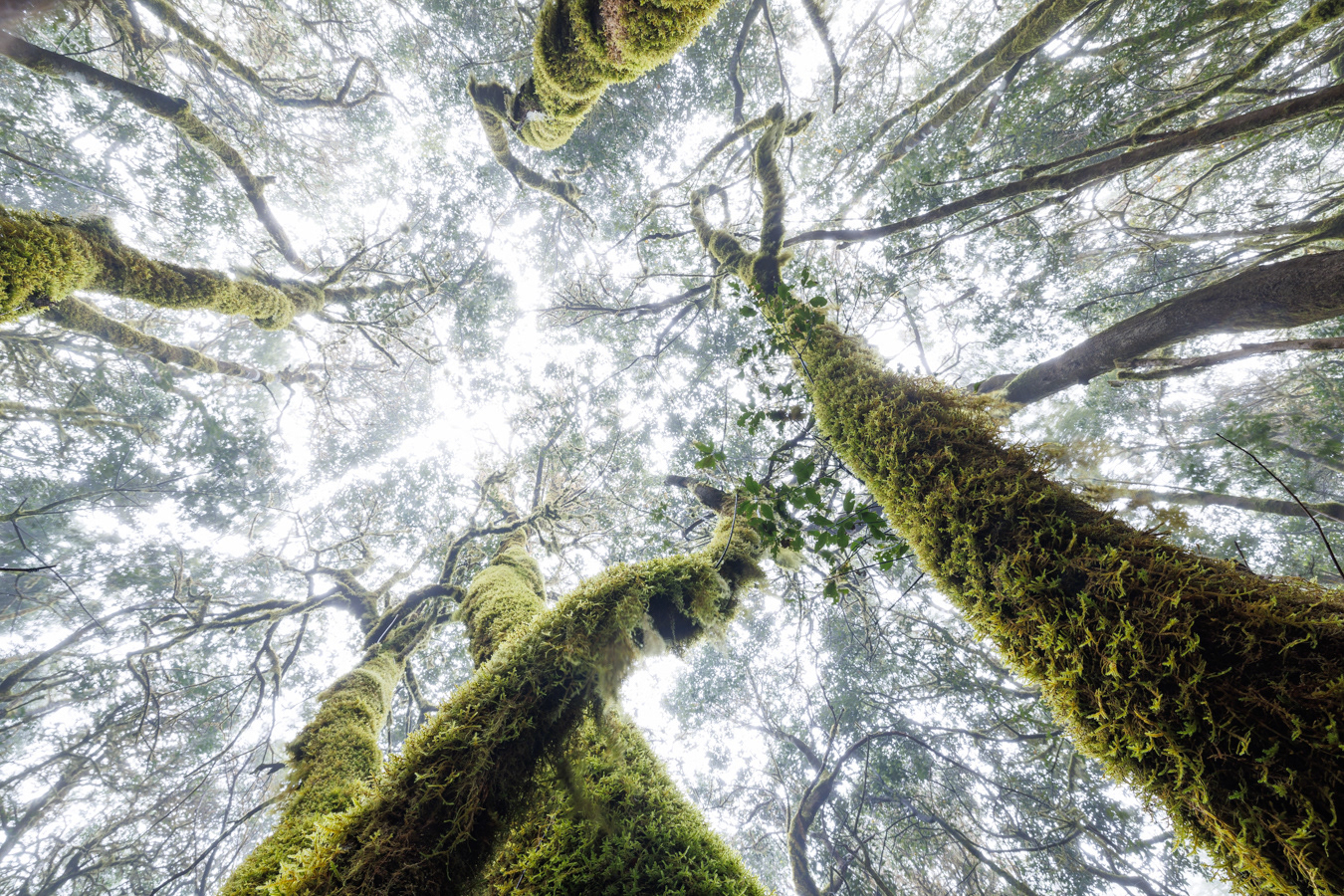
Laurisilva at Raso de La Bruma, La Gomera
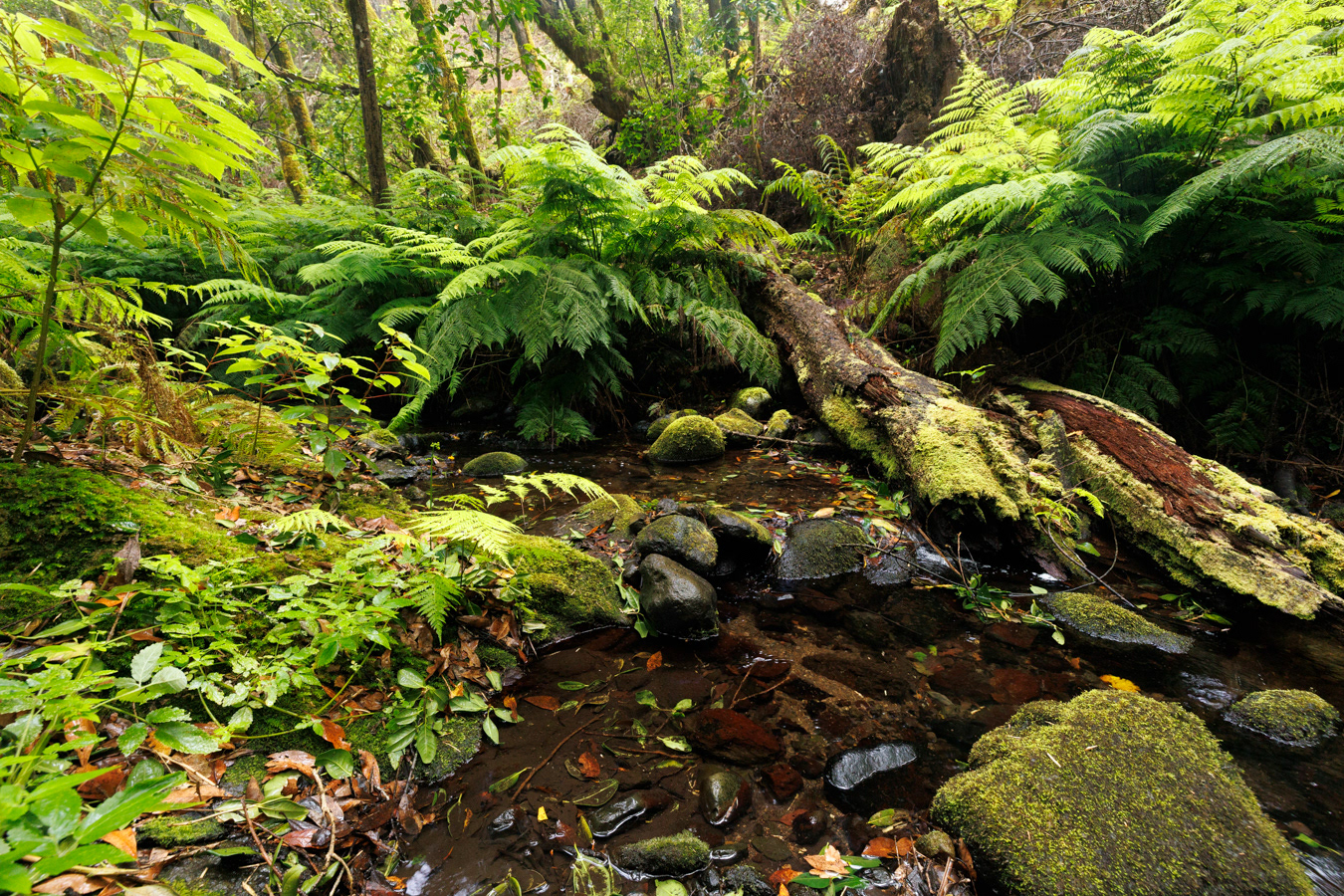
Small creeks run within the inner portion of laurisilva. El Cedro, La Gomera
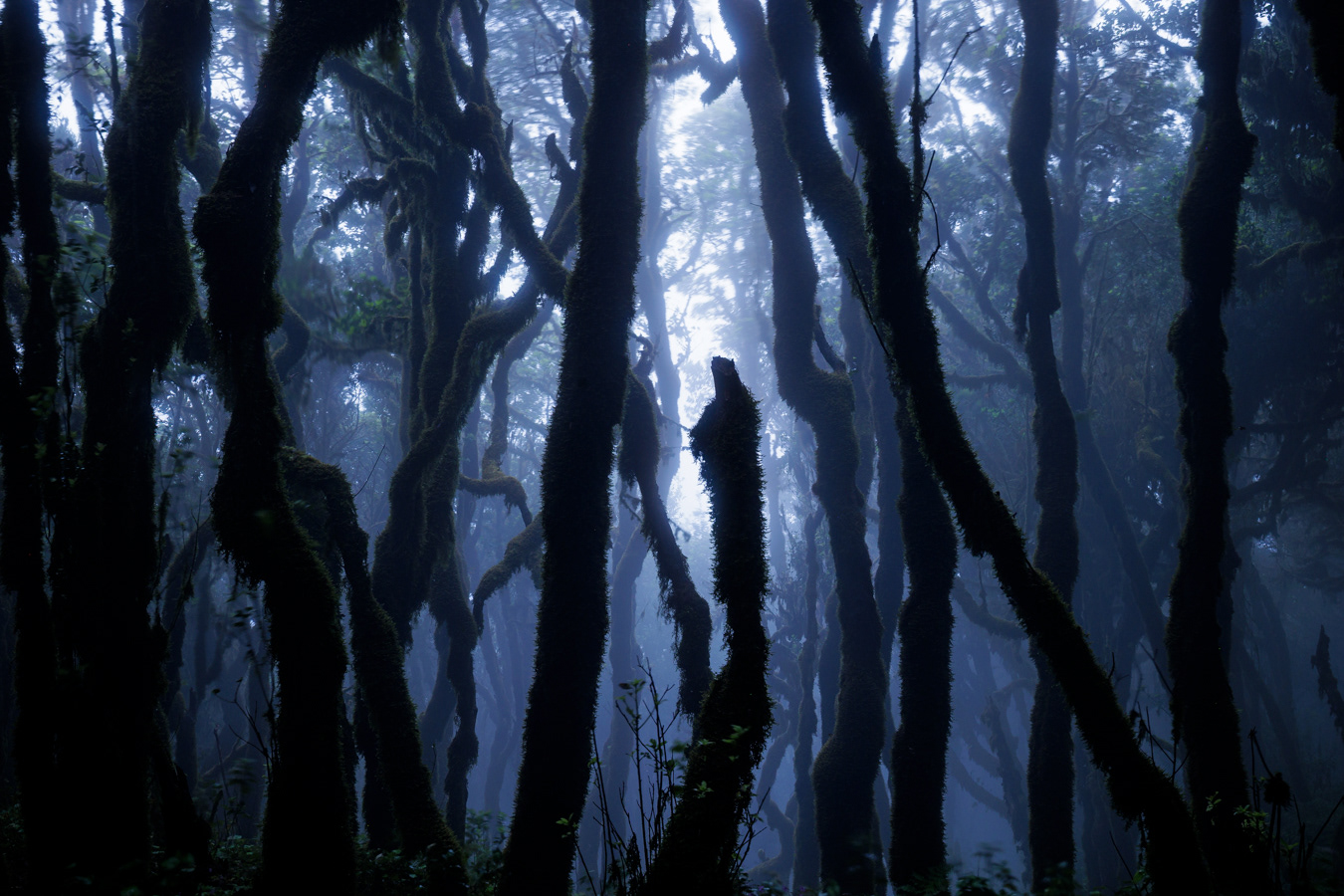
Laurisilva at Raso de La Bruma, La Gomera
The Measure of Time
On the Canary Islands, especially Lanzarote and Fuerteventura, time seems to dilate and compress from one place to another. Even the islands themselves are geologically arranged in chronological order, from east to west: the eastern islands are older and more sculpted by erosion, while the western ones remain rugged and youthful.
On the Canary Islands, especially Lanzarote and Fuerteventura, time seems to dilate and compress from one place to another. Even the islands themselves are geologically arranged in chronological order, from east to west: the eastern islands are older and more sculpted by erosion, while the western ones remain rugged and youthful.
One day, you’ll find yourself marveling at a dark, barren lava flow, sharply distinct from its surroundings, and learn that it dates back to the “recent” eruptions... of the 1700s. Such is how long is required for pedogenesis—the slow creation of soil capable of sustaining pioneer plant species.
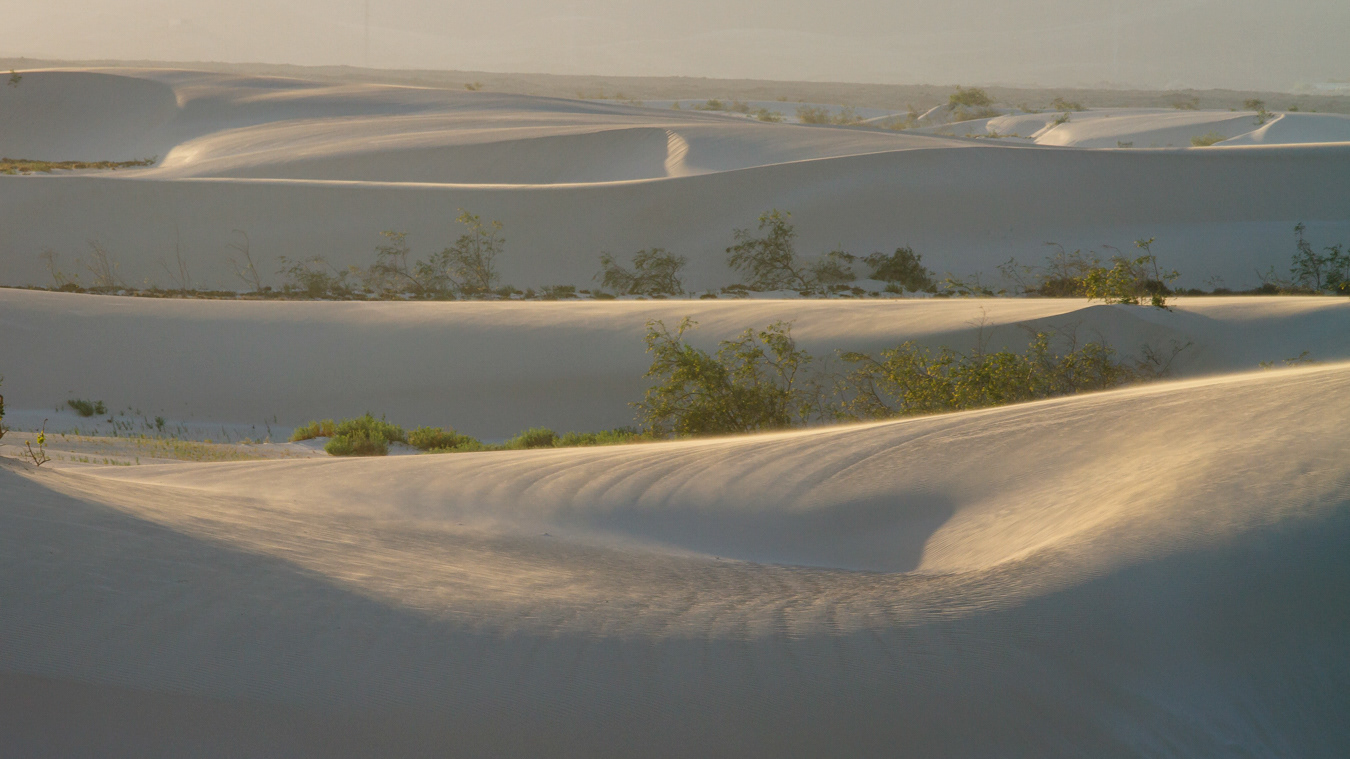
In contrast, while scanning a beach scattered with shells and fresh remnants of marine life, you might stumble upon hard sand tubes, pierced on one side. These are ancient Antophora wasp nests, now fossilized. You’ll also spot them on the steep walls of Fuerteventura’s barrancos—deep ravines that cut into the desert plains. In such places, time flows vertically across millennia, etched into sculpted sandstone by wind and water. Meanwhile, watch the walls: birds are more numerous here than elsewhere in the archipelago. And look to the ground: you may spot reptiles basking in the sun.
Even the laurel forests are remnants of deep time. They’re relics of the Tertiary period, the last living fragments of a vast forest that once stretched from the Mediterranean to Asia. Today, they survive in just a few islands thanks to a phenomenon known as lluvia horizontal—horizontal rain formed when the trade winds’ moisture condenses on the mountainsides. In the Canaries, millions of years are traversed in just a few kilometers; not through fossils, but by stepping into living ecosystems.
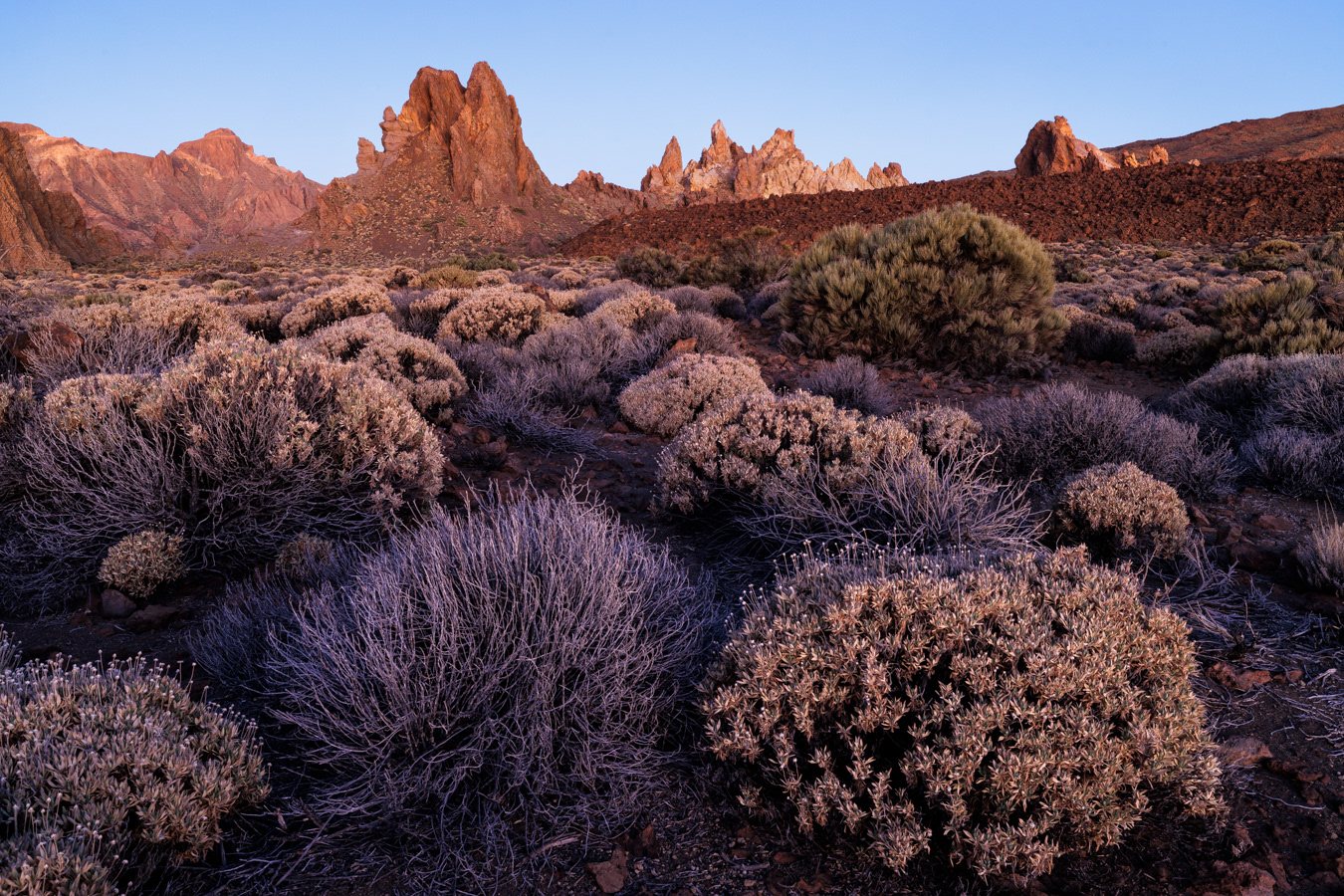
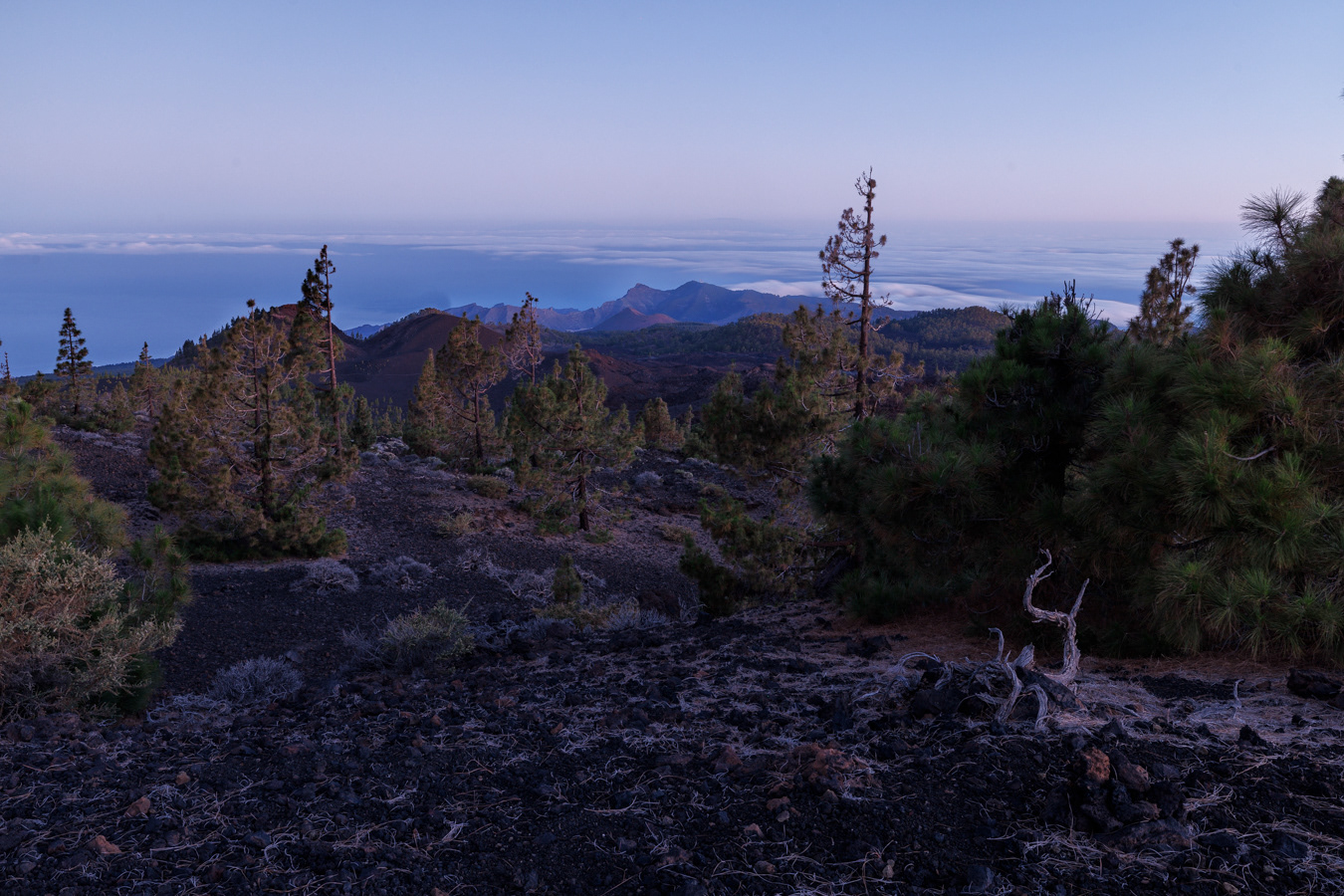
Recent and past eruptions, and ancient eroded volcanic cones, on the Canadas del Teide, Tenerife
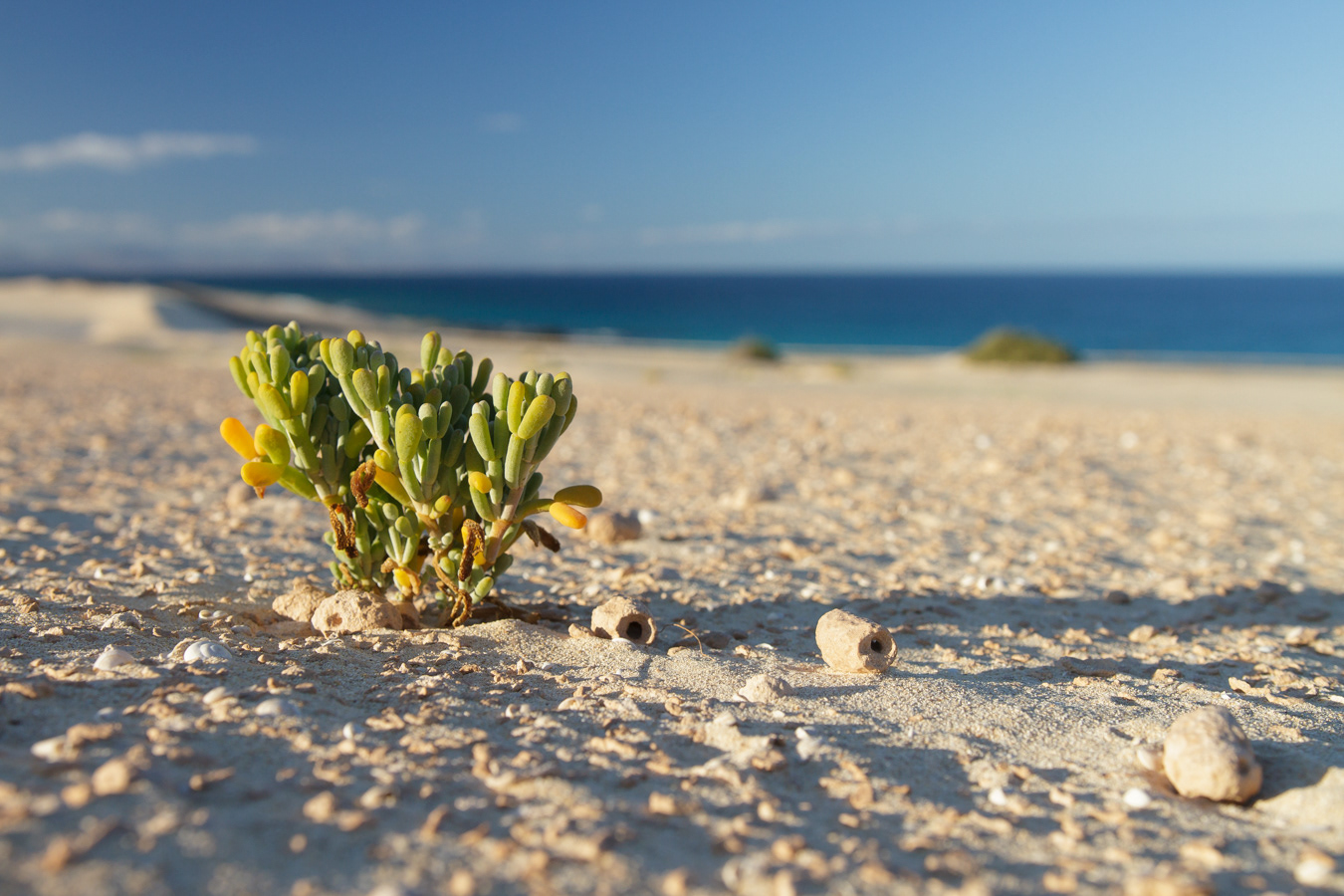
Fossilized nests of Antophora bees and a Zygophyllum plant on a Fuerteventura sandy dune
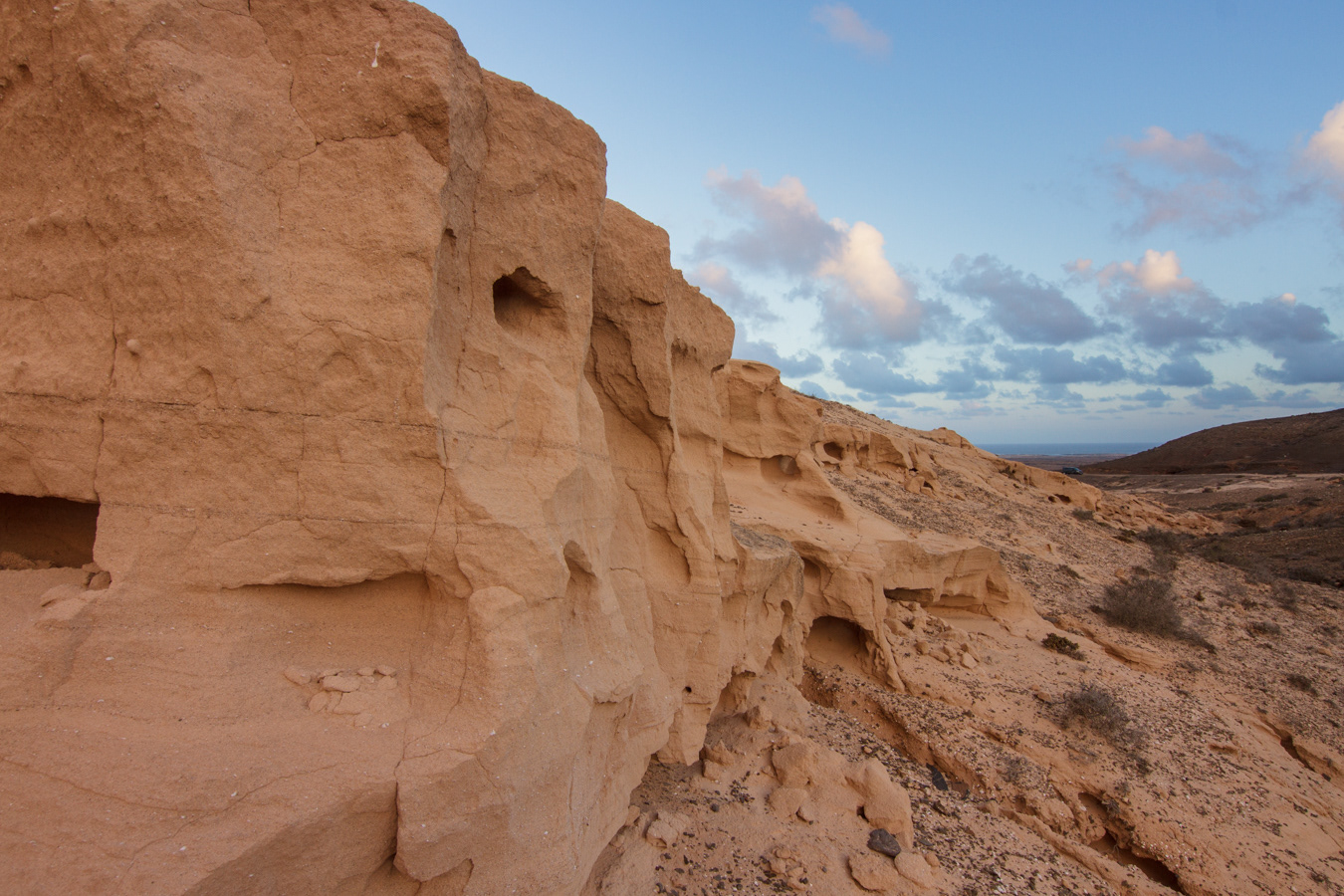
Barrancos wall in Fuerteventura
The Sense of Water
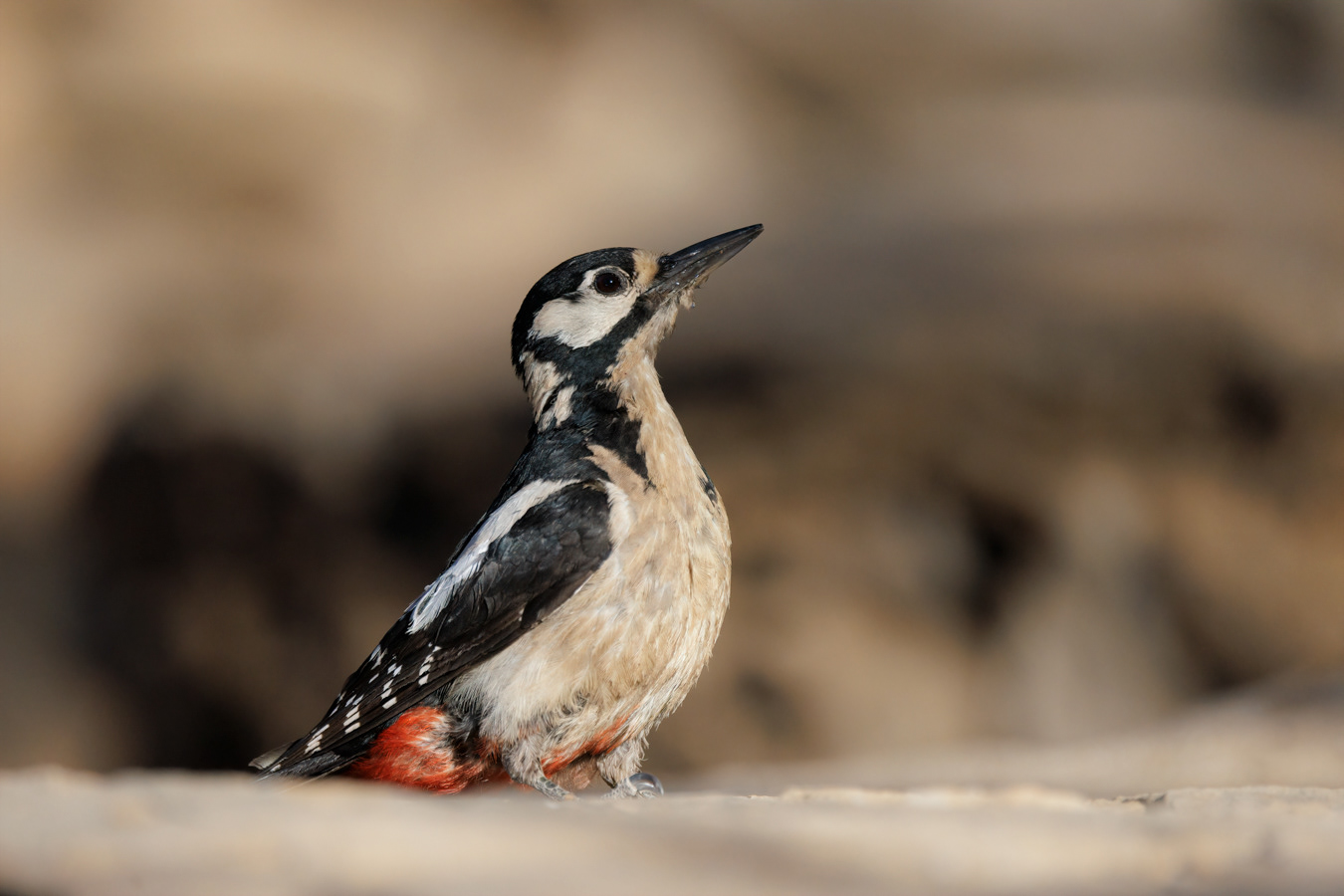
To survive on these islands, every organism must have an acute awareness of water: its presence, when fresh, and its movements, when saline. Terrestrial life may often seem sparse, but the moment fresh water appears, natural or man-made, life bursts forth. A simple tourist water fountain can become a heaven for the best of the island’s endemic birdlife, depending on its surrounding habitat. In the pine forests of Tenerife, for example, you may spot the blue chaffinch or the island’s red woodpecker.
To survive on these islands, every organism must have an acute awareness of water: its presence, when fresh, and its movements, when saline. Terrestrial life may often seem sparse, but the moment fresh water appears, natural or man-made, life bursts forth. A simple tourist water fountain can become a heaven for the best of the island’s endemic birdlife, depending on its surrounding habitat. In the pine forests of Tenerife, for example, you may spot the blue chaffinch or the island’s red woodpecker.
As you hike, if you haven’t already noticed it yourself, the sudden rustle of lizards or the chirp of finches, pipits, and wagtails will often signal the closeness of water.
Along the coasts, at low tide, the intertidal zone reveals another world. Teeming with fish, crustaceans, and mollusks, it’s especially hard to miss the darting Grapsus adscensionis—bright red runner crabs that scurry across rocks and algae beds, making a distinct clicking sound as they go.
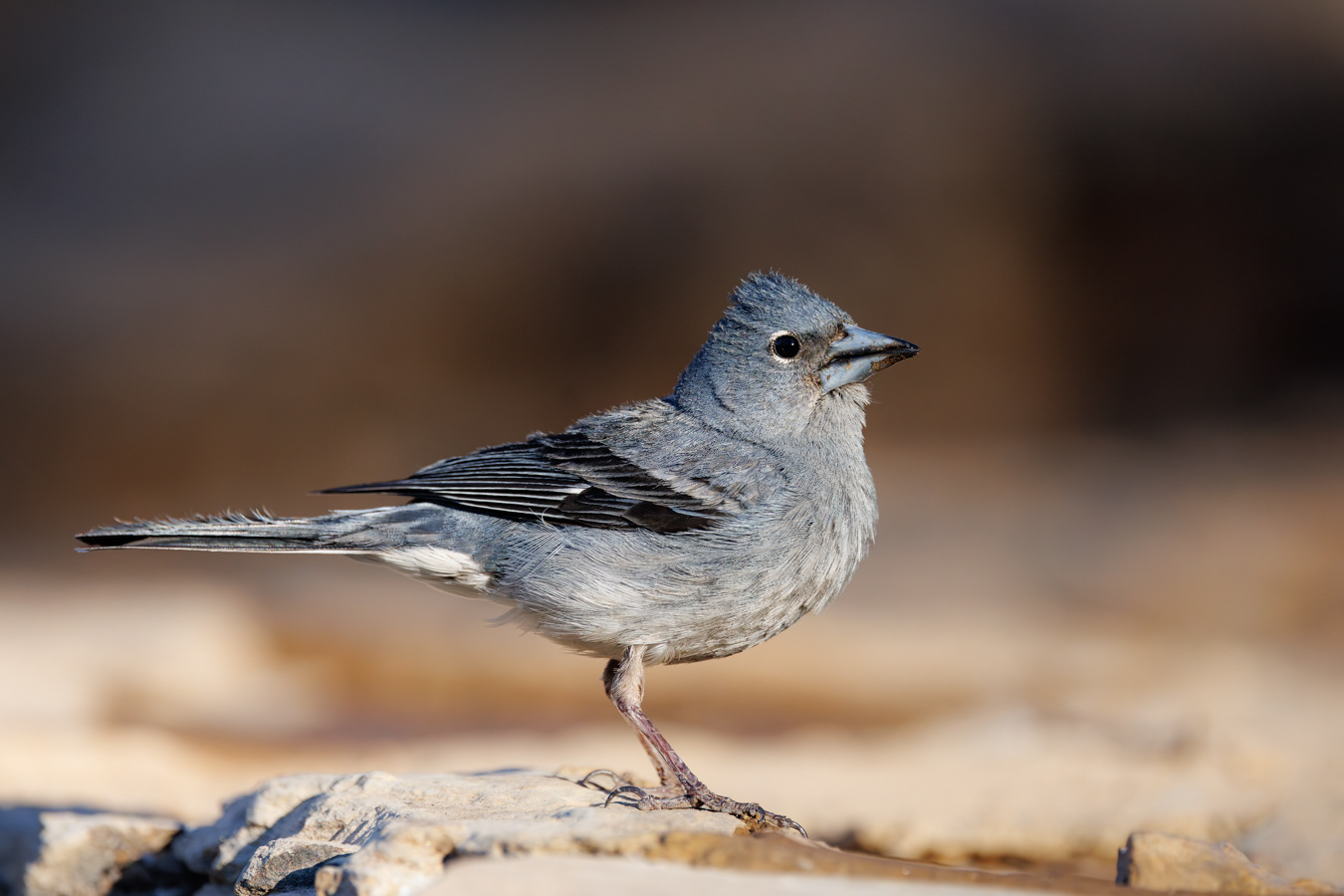
A male blue chaffinch (Fringilla teydea) on a pic-nic area within the pine forest in Tenerife
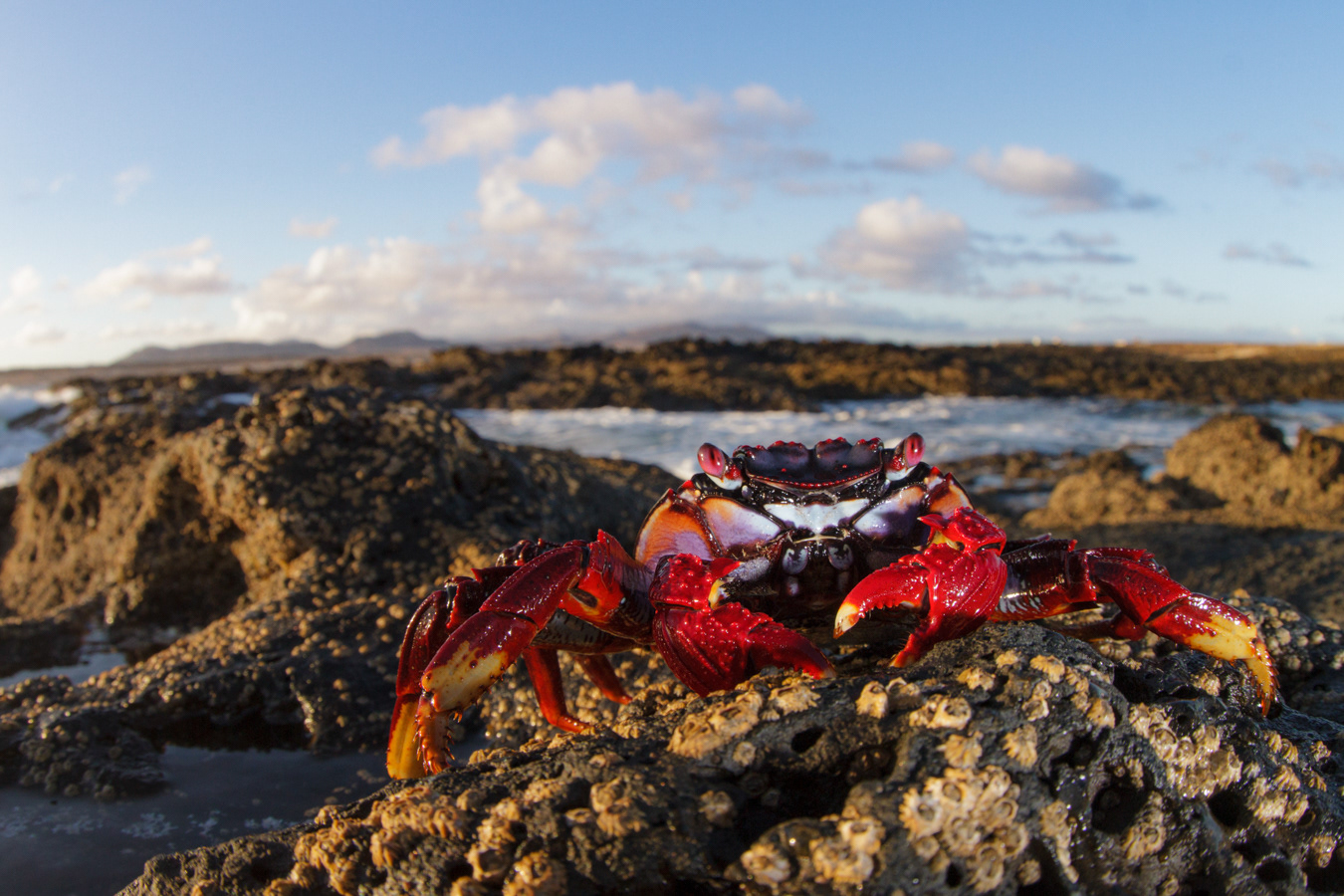
The colored crab Grapsus adscensionis is common in tide pools along all the Canarian coasts
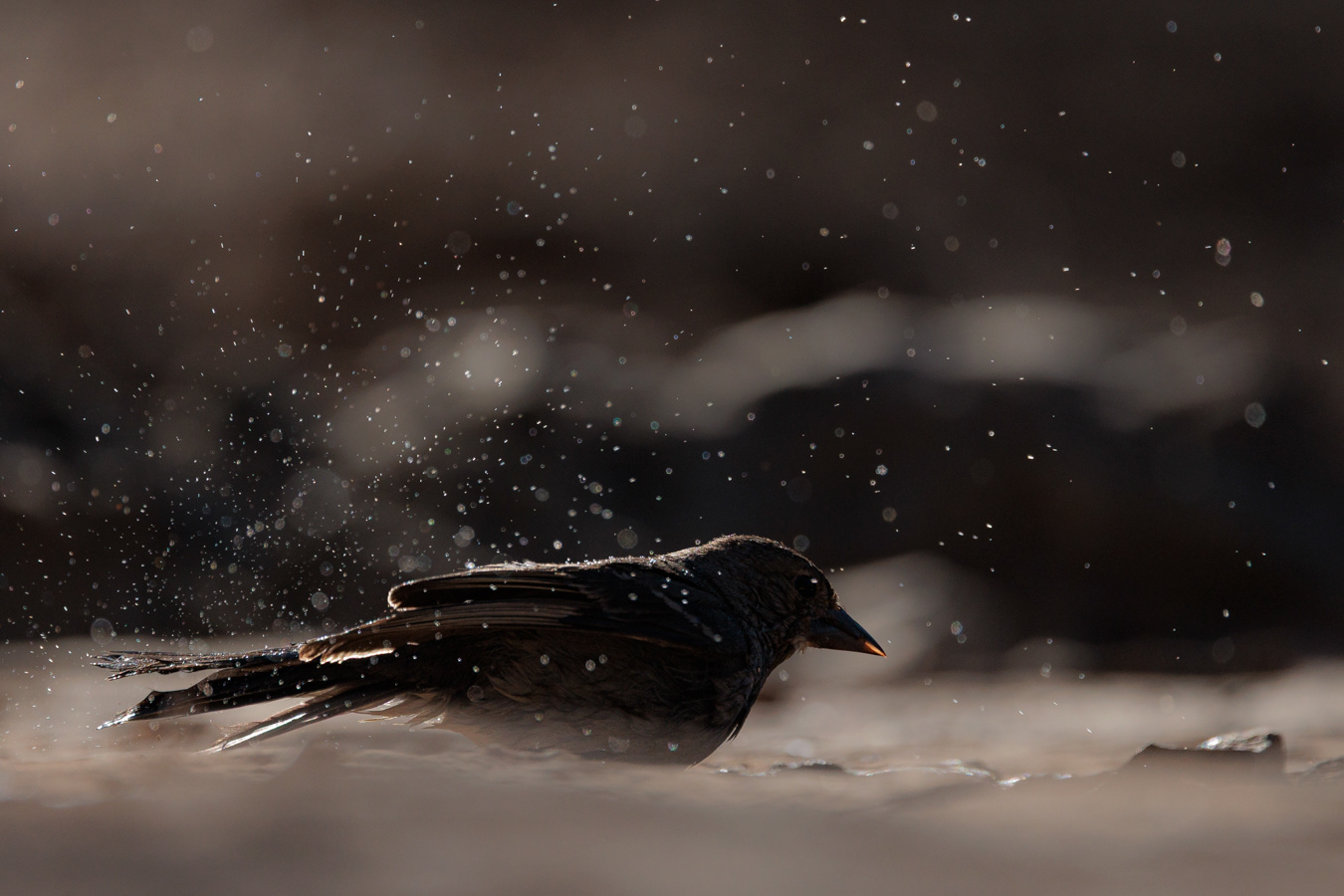
Water pools are like magnets for a blue chaffinch (Fringilla teydea, here a female)
The Exotic Feeling
For European naturalists, the Canaries are disorienting. On one hand, many of the endemic animal species resemble their mainland counterparts, giving observers the sense that they can easily interpret and categorize what they see. On the other hand—particularly in the plant world—the feeling of having landed on an entirely new planet is frequent, fascinating, and sometimes unsettling.
For European naturalists, the Canaries are disorienting. On one hand, many of the endemic animal species resemble their mainland counterparts, giving observers the sense that they can easily interpret and categorize what they see. On the other hand—particularly in the plant world—the feeling of having landed on an entirely new planet is frequent, fascinating, and sometimes unsettling.
The ocean, vast and unpredictable, only reinforces this sense of strangeness. Take, for example, the periodic arrival of sargassum—floating, branching seaweed that drifts from the North Atlantic to Canary shores in favorable years. While human influence may have played a role in the global increase of these blooms, they act as vessels for all sorts of organisms, carried across thousands of kilometers. Among them is Planes minutus, a tiny crab described by Columbus himself near Madeira in 1492. On Tenerife’s low-tide beaches, you may find these camouflaged crabs hiding among stranded sargassum—blending in with their golden hues or drying in the harsh island sun.
At night, especially on La Gomera, unfamiliar sounds intensify the exotic feel. In summer, the plaintive cries of Cory’s shearwaters (Calonectris borealis) returning to their nests sound hauntingly like a baby crying at sea. More eerie still are the nocturnal calls of endemic geckos (Tarentola gomerensis, Tarentola delalandii, or Tarentola angustimentalis), often heard just meters away, perhaps even in your garden—evoking a ghostly, impish presence in the darkness.
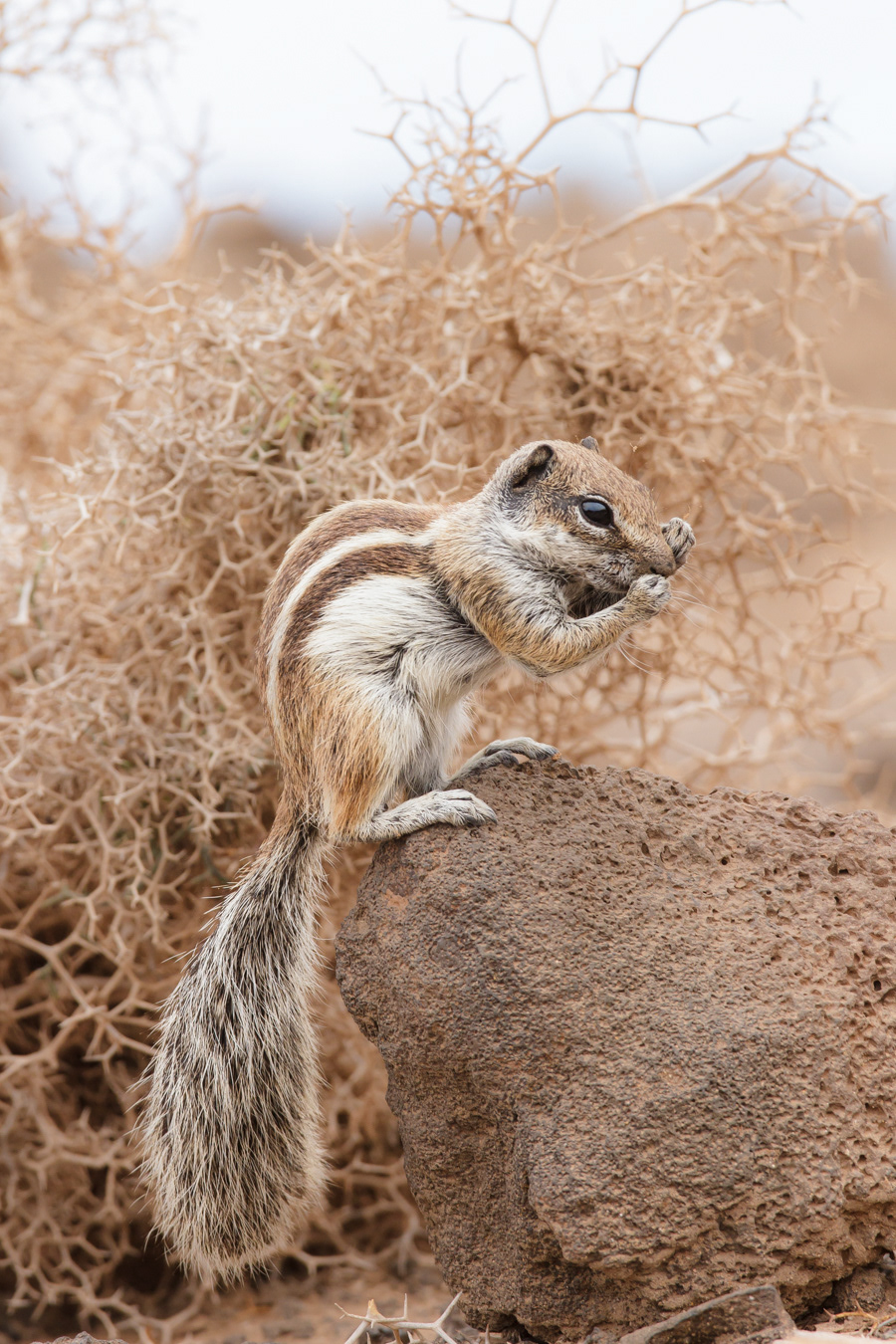
Some exotic species, however, are invasive, being brought by humans. Among them, the Barbary ground squirrel (Atlantoxerus getulus) stands out. This curious creature is hard to miss as it darts across the rocky flats of Fuerteventura, an alien emblem of human interference in this otherwise wild world.
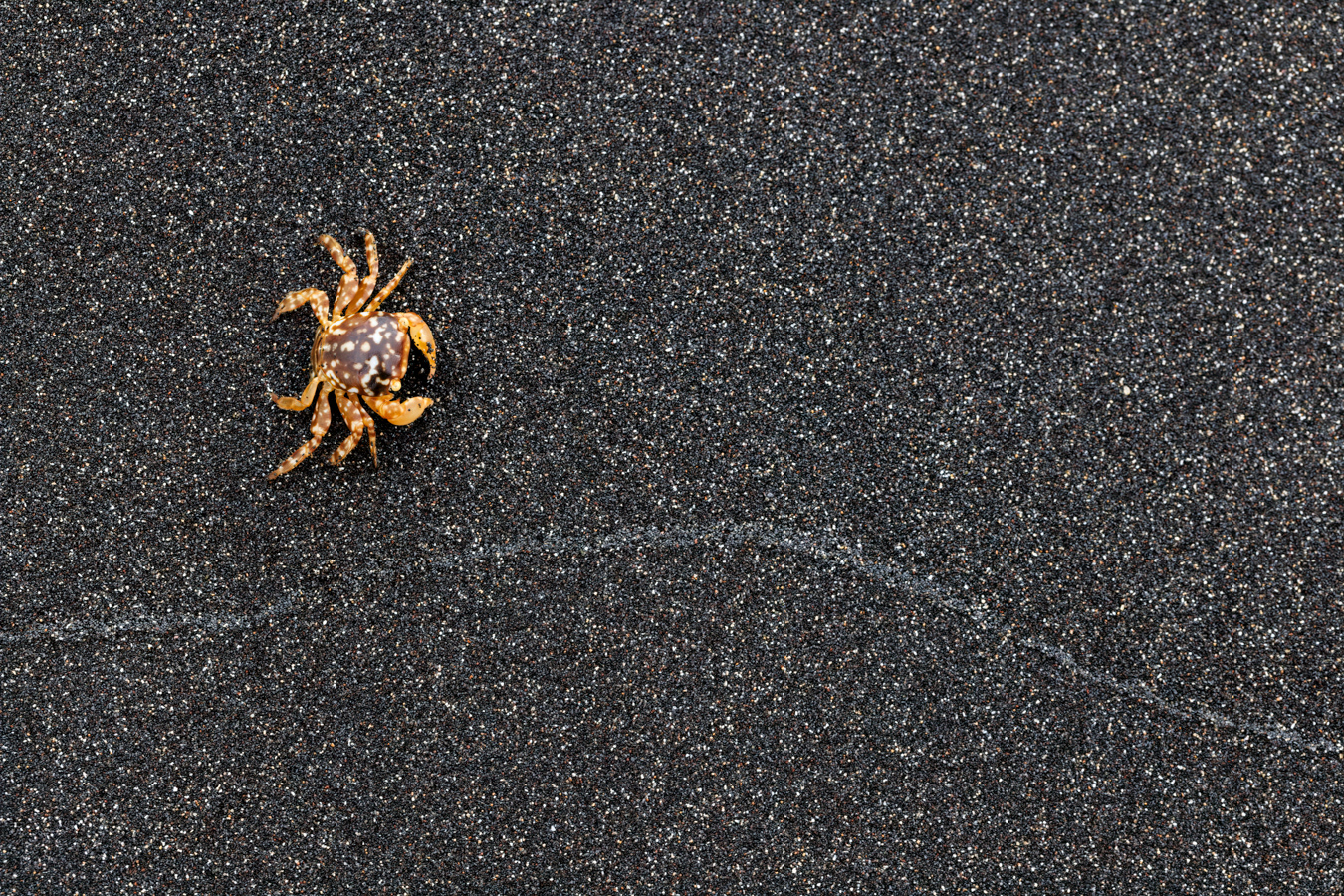
The globetrotter Planes minutus as soon as arrived on a Tenerife beach
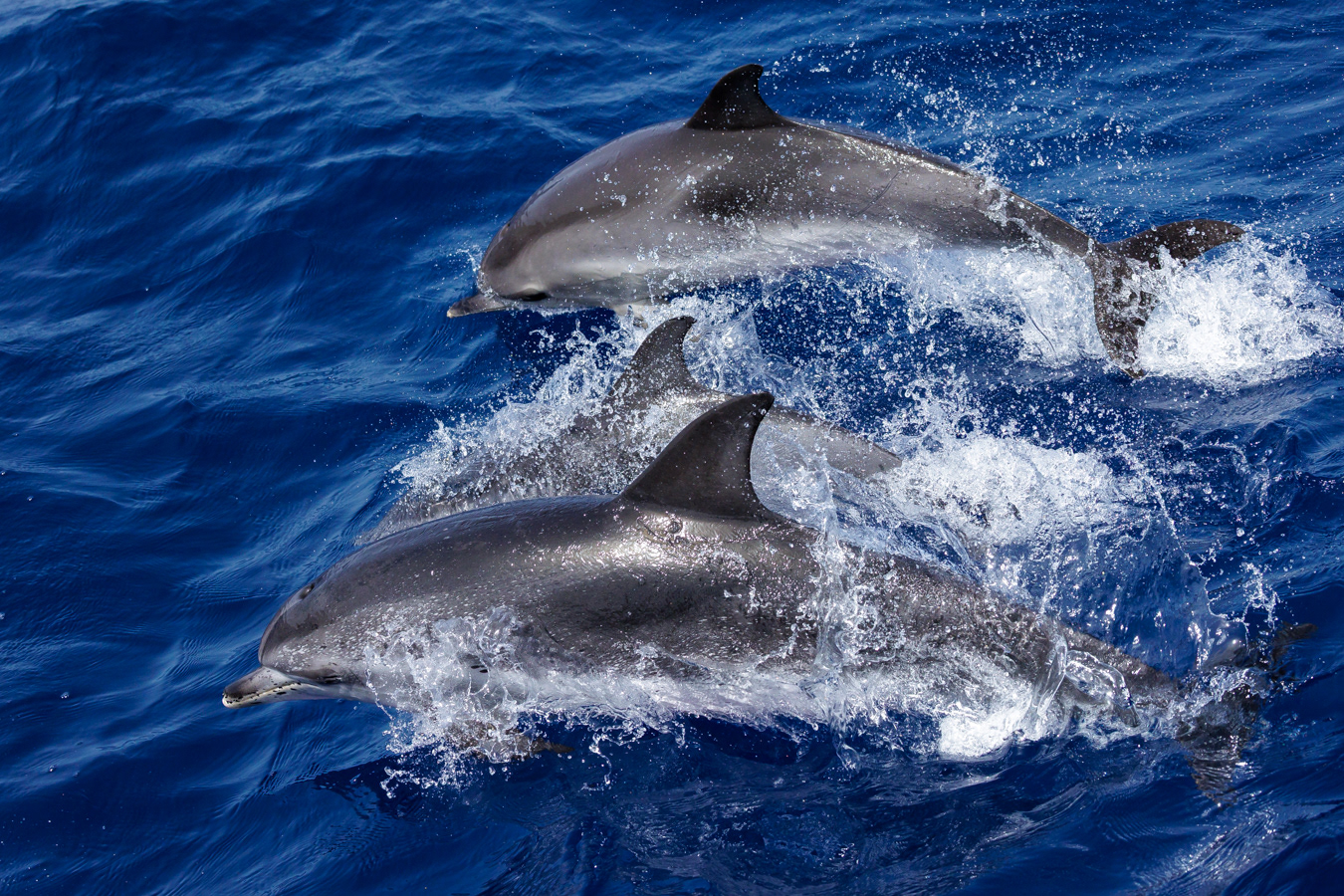
Atlantic spotted dolphins (Stenella frontalis), offshore of La Gomera
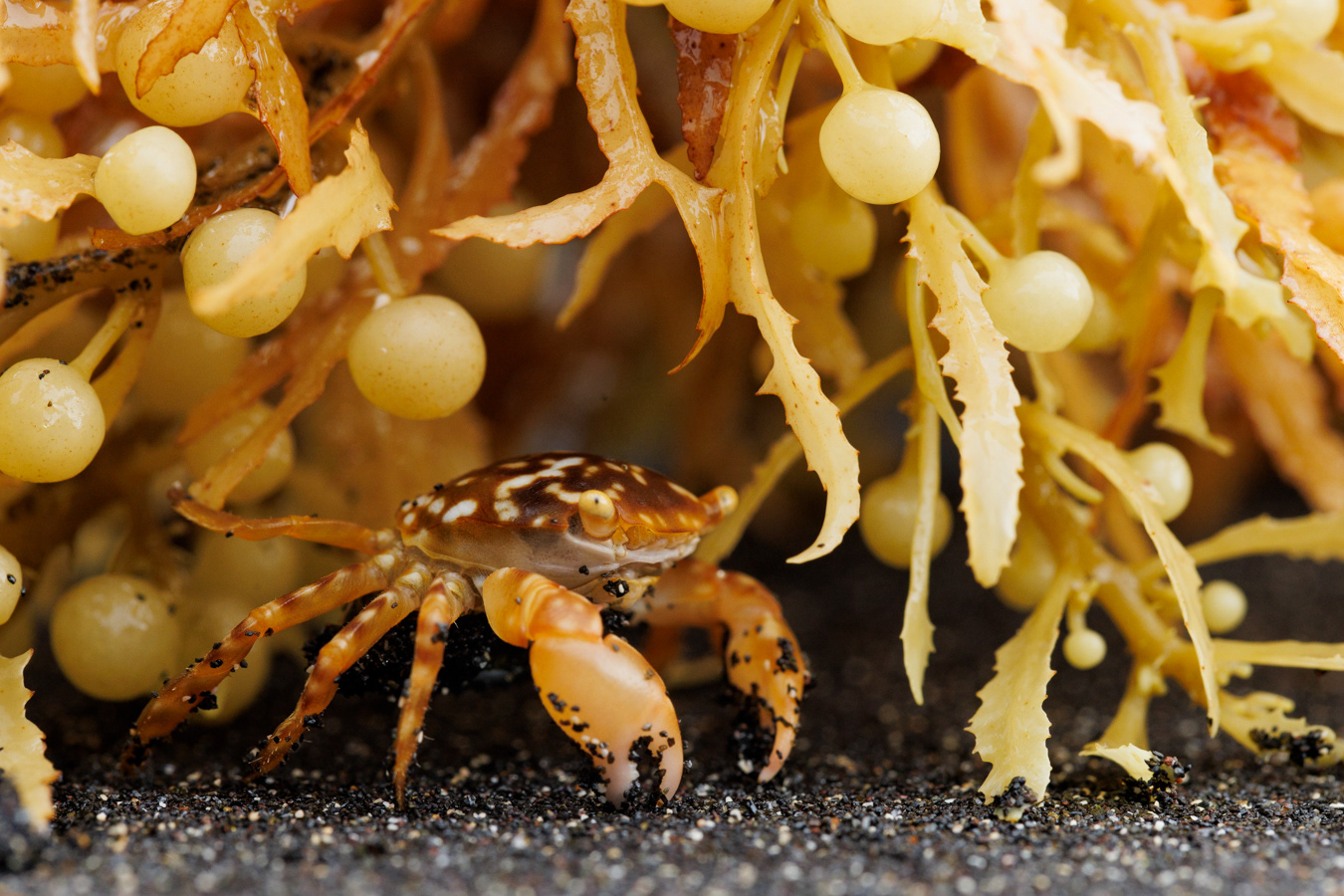
The crab Planes minutus and their dispersal vector, a Sargassum
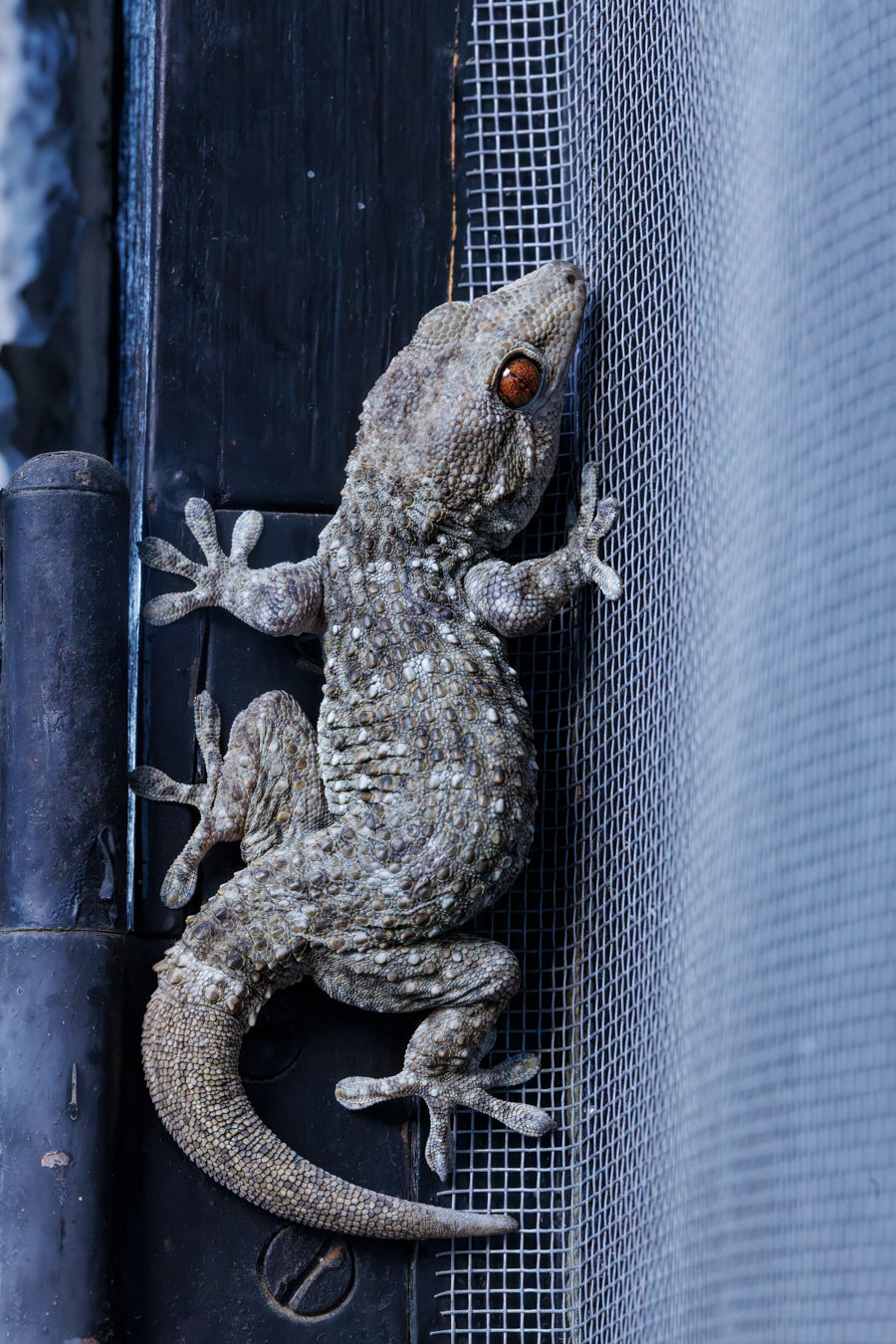
The endemic Gomera Wall Gecko (Tarentola gomerensis), on a house window
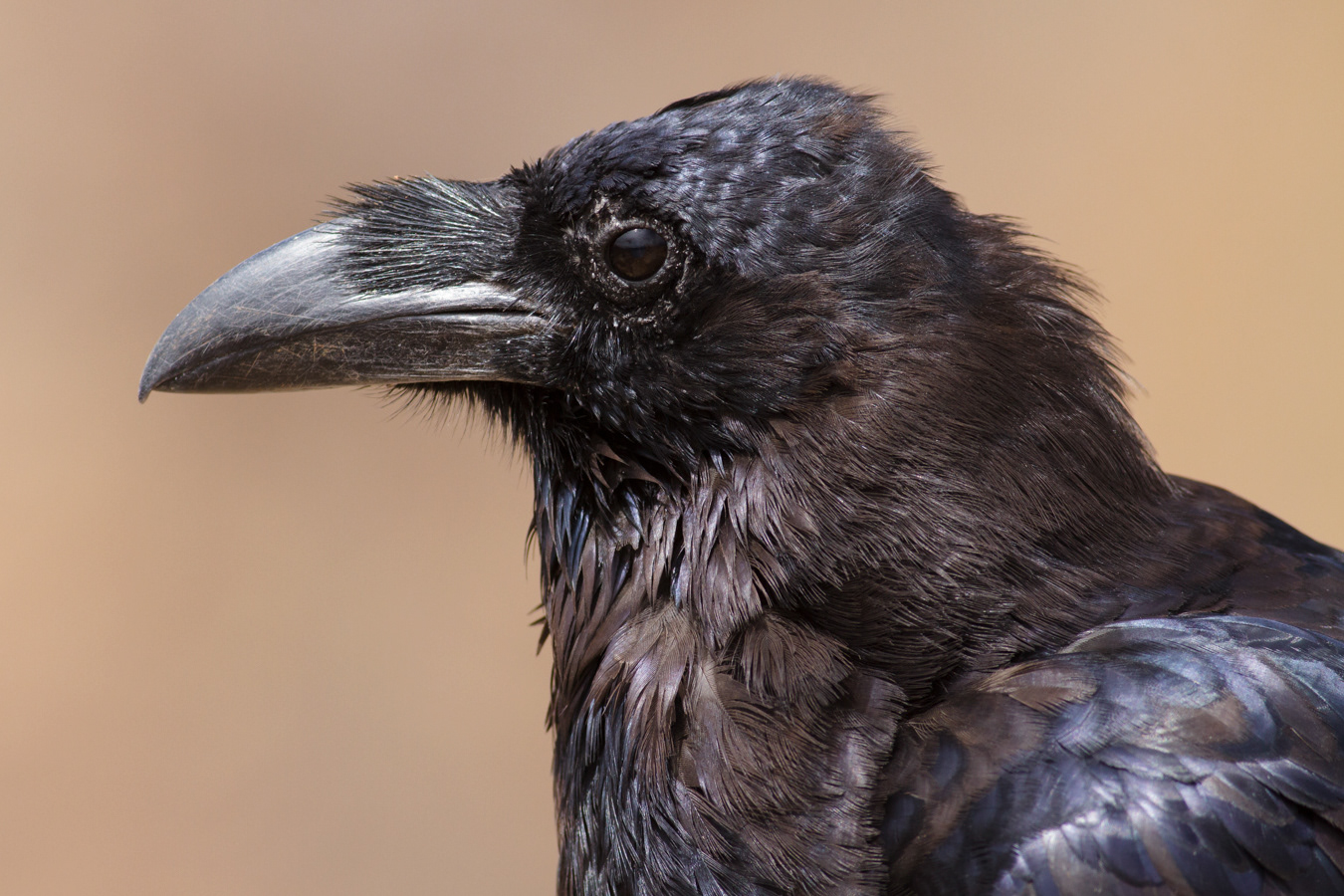
The endemic Corvus corax tingitanus, a smaller ubspecies of the European raven
The Canary Islands reveal themselves as lands of extraordinary natural beauty, where observations are never excessively easy, or predictable. And surely, by the end of your journey, you won’t feel you've had enough. Quite the opposite: I’m willing to bet that once you've been, you’ll feel the irresistible pull to return.
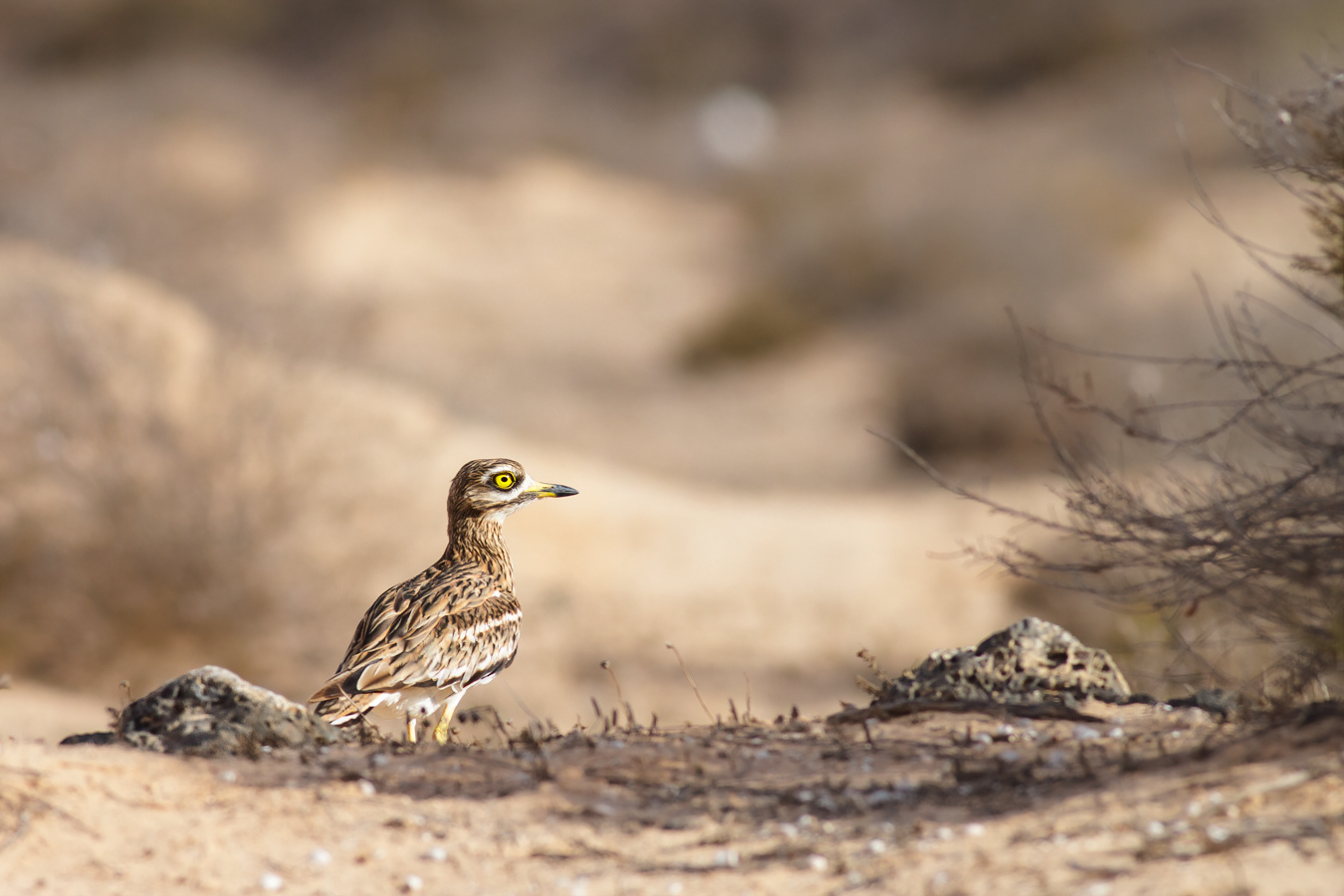
Thank you!